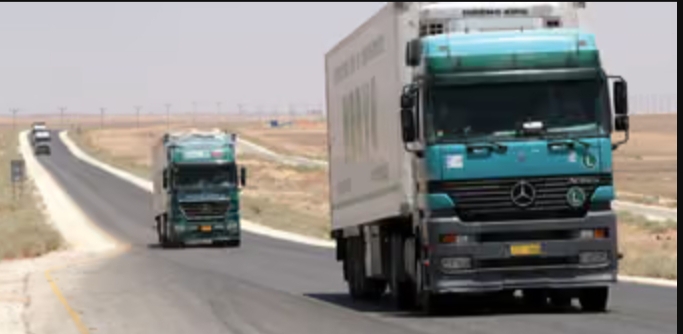
Egypt has lifted a two-week restriction that prevented empty Iraqi trucks from entering the country, allowing privately operated Iraqi vehicles to resume crossing into Egyptian territory from Monday, August 17, 2026.
The development ends a disruption that had affected road freight operations between Iraq and Egypt since August 1 and followed diplomatic engagement between Iraqi officials and Egyptian authorities.
The Iraqi Embassy in Cairo confirmed that Egypt had agreed to restore entry for empty Iraqi trucks after discussions with the relevant Egyptian authorities. Iraq’s Transport Ministry also reported that the movement of empty vehicles into Egypt had resumed.
The reopening is significant for road transport operators because empty trucks are an important part of the freight cycle. Vehicles that deliver cargo need to be able to return, reposition or move to another destination before taking on new loads. Restrictions on such movements can increase transport costs, delay deliveries and create operational difficulties for trucking companies.
The Iraqi embassy said the decision followed sustained diplomatic efforts aimed at easing land-transport procedures and strengthening economic and commercial cooperation between the two countries.
The embassy further indicated that the matter has not been considered completely resolved. Instead, the two governments are expected to take the issue to specialised technical committees when Iraqi and Egyptian officials meet in September.
Those discussions are expected to examine the rules governing truck movements, the implementation of existing road-transport arrangements and other issues affecting freight operators from both countries.
Why Egypt Banned The Iraqi Trucks
The two-week restriction emerged from wider disagreements surrounding the operation of Iraqi and Egyptian trucking companies and the conditions under which vehicles from either country can operate across the two markets.
One of the major issues reportedly concerns the treatment of empty trucks. Egyptian trucking interests had raised concerns about foreign vehicles entering the country without cargo and subsequently taking freight that domestic operators believed should be available to Egyptian transport companies.
The dispute therefore goes beyond a simple border-entry issue. It touches on competition, reciprocal access, driver requirements and the practical implementation of the road-transport framework between Iraq and Egypt.
Another issue expected to feature prominently in the September discussions is the movement of Egyptian truck drivers into Iraq. Iraqi officials have pointed to questions surrounding visas for Egyptian drivers, while the two sides are also expected to examine whether Egyptian vehicles receive comparable access when operating in Iraq.
These issues have created the need for a more detailed arrangement that can establish clearer rules for transport operators and reduce the possibility of similar disruptions in the future.
September Talks To Address Transport Disputes
Iraqi officials are expected to use the upcoming technical meetings to seek a longer-term solution to the disagreements.
Among the matters expected to be discussed are the implementation of the bilateral road-transport agreement, requirements affecting empty trucks and arrangements for freight transit between the two countries.
The meetings are also expected to address procedures involving cargo transfers at Jordan’s Al-Karamah border crossing, an important point in the wider overland movement of goods involving Iraq and neighbouring countries.
The goal is to establish predictable procedures that can be followed by transport companies rather than relying on temporary arrangements whenever disputes arise.
For freight operators, clarity is particularly important because road transport depends heavily on predictable border procedures. Changes affecting the movement of trucks can have consequences for delivery schedules, vehicle utilisation, operating expenses and the availability of cargo.
Iraq And Egypt Already Have A Transport Framework
The latest disagreement comes against the backdrop of efforts by Iraq and Egypt to expand their economic relationship.
On January 30, 2025, the two countries signed a series of agreements during the third session of the Iraqi-Egyptian Joint Higher Committee in Baghdad. The agreements covered several areas, including land transport of people and goods. Egypt’s State Information Service confirmed that Prime Minister Mostafa Madbouly travelled to Baghdad for the high-level meetings with Iraqi Prime Minister, Mohammed Shia Al-Sudani.
The land-transport memorandum was part of a broader package designed to strengthen economic cooperation between the two countries. Other agreements covered areas such as trade, telecommunications, competition, culture, financial-market oversight and grain storage.
The transport agreement was therefore intended to provide a framework for increasing road connectivity and facilitating the movement of people and goods between Iraq and Egypt.
The latest dispute demonstrates, however, that signing a bilateral framework does not automatically resolve every practical problem faced by transport operators. Questions concerning implementation, access and reciprocal treatment can still require further negotiation between government agencies.
Impact On Bilateral Trade
The restoration of truck entry could help ease pressure on road freight operators that have been affected by the restriction since the beginning of August.
For Iraqi trucking companies, the ability to enter Egypt with empty vehicles allows vehicles that have completed previous assignments to continue operating rather than remaining outside the market.
The development could also support the wider flow of goods between Iraq and Egypt by reducing uncertainty around land transport.
Iraq and Egypt have been seeking to deepen commercial relations in recent years, with both governments promoting greater private-sector participation and stronger economic ties.
In January 2025, Iraqi and Egyptian officials held an economic forum in Baghdad attended by about 300 entrepreneurs and business representatives from the two countries. The meeting focused on expanding opportunities for cooperation across different sectors.
The two countries subsequently continued to promote closer economic relations, making efficient transportation links increasingly important to businesses involved in bilateral trade.
Temporary Resumption Could Lead To Permanent Rules
Although the August 17 reopening provides immediate relief to Iraqi transport operators, the upcoming September technical meetings could determine whether the arrangement becomes part of a more permanent framework.
The Iraqi embassy’s position suggests that both sides recognise the need to move beyond temporary decisions and establish sustainable procedures governing truck movements.
The discussions are expected to cover the conditions for truck entry, reciprocal access for Egyptian and Iraqi vehicles, driver documentation and visa requirements, freight-transfer procedures and the implementation of the bilateral road-transport agreement.
A clearer system could reduce the risk of future border disruptions and give transport companies greater certainty when planning cross-border operations.
For now, Iraqi empty trucks can once again enter Egypt from August 17 after the two-week suspension. However, the underlying disagreements have not necessarily disappeared. Instead, they are expected to become a central subject of negotiations between Iraqi and Egyptian technical officials in September.
The outcome of those discussions could determine how road freight between the two countries is regulated going forward and whether the latest reopening becomes a lasting improvement in Iraq-Egypt trade connectivity.
The development also highlights the importance of the transport relationship to the broader economic partnership between Baghdad and Cairo. With both governments seeking to expand bilateral commerce, resolving practical barriers affecting freight operators will remain essential to turning their trade agreements into sustained commercial activity.