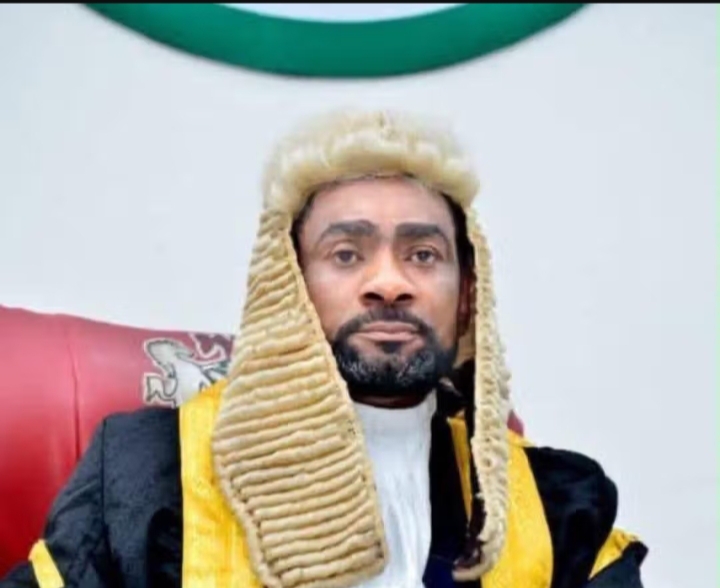
Blessing Agbebaku has resigned as Speaker of the Edo State House of Assembly, bringing his tenure to an abrupt end amid reports of mounting pressure from lawmakers seeking his removal.
Agbebaku announced his resignation during Monday’s plenary in Benin City, shortly before lawmakers elected Yekini Idaiye, representing Akoko-Edo I Constituency, as the new Speaker of the 24-member Assembly.
The resignation came against the backdrop of reported moves by a group of lawmakers to remove Agbebaku from office. Multiple reports indicated that as many as 18 members had backed efforts to effect a leadership change in the House.
Explaining his decision, Agbebaku said he had been asked to step aside in the interest of peace in Edo State. He suggested that although the decision was difficult, he was prepared to accept it rather than allow the political disagreement to escalate.
Agbebaku, who represents Owan West Constituency, said he had not been born to occupy the position of Speaker and described his decision to leave office as one taken in the broader interest of the State.
He also acknowledged the role of Governor Monday Okpebholo during his tenure and indicated that he was willing to respect a decision he believed was intended to preserve peace between the political actors in the State.
According to reports of his remarks during the plenary, Agbebaku said he had been expected to lead the procession into the chamber before formally relinquishing the Speaker’s seat.
He thanked the Governor for the support he received while serving as Speaker and maintained that the priority should be ensuring stability in Edo.
The former Speaker’s resignation effectively ended a period of uncertainty surrounding the leadership of the Assembly, which had reportedly been facing internal disagreements over legislative and administrative matters.
Agbebaku had served as Speaker of the 8th Edo State House of Assembly since June 2023, when he emerged as the leader of the House after lawmakers elected him to succeed the previous leadership. His departure now marks a major political development in the State’s legislature.
Pressure Builds Within Edo Assembly
The circumstances surrounding Agbebaku’s resignation have generated considerable political interest, particularly because of reports that lawmakers had been considering his removal before Monday’s sitting.
Although there were claims that the pressure did not directly originate from the Government House, reports suggested that some individuals close to Governor Okpebholo, alongside senior members of the All Progressives Congress, were involved in efforts to change the leadership of the Assembly.
Agbebaku was also reportedly facing complaints relating to his handling of certain legislative matters, including the alleged failure to facilitate the clearance of a nominee put forward by the Governor for an appointment.
The allegations, however, remain subject to further investigation and should not be treated as established findings.
The political tension became more evident on Monday as the Assembly proceeded with a change of leadership.
Before the sitting, Agbebaku reportedly arrived at the Assembly complex early in the morning and summoned members of his staff. He was said to have directed them to move his personal belongings from the Speaker’s office to the office assigned to his constituency.
Following his resignation, Deputy Speaker, Osamwonyi Atu Osamwonyi, took over proceedings before the House moved to elect a replacement.
Idaiye Emerges New Speaker
Yekini Idaiye subsequently emerged as the new Speaker of the Edo State House of Assembly.
His nomination was made by Sunny Ojezele, representing Esan South-East Constituency, and seconded by Eric Okaka, representing Owan East Constituency.
Idaiye secured 17 of the 24 votes cast by lawmakers and was subsequently sworn in by the Clerk of the House.
His emergence signals a new phase for the Assembly, with the new Speaker immediately pledging to improve the conduct of legislative business and ensure that lawmakers concentrate on their constitutional responsibilities.
Addressing members after his election, Idaiye said the Assembly must return its attention to lawmaking, representation and oversight.
He recalled that the 8th Assembly was inaugurated in June 2023 with 24 lawmakers who, according to him, entered office with the intention of serving the common interest of Edo residents.
However, he criticised what he described as personal interests and prolonged disagreements that had affected the effectiveness of the legislature.
Idaiye also took aim at the disruption of plenary activities, arguing that the Assembly should operate consistently and remain focused on its core responsibilities.
He said the legislature was established primarily to make laws and conduct oversight rather than become a platform where legislative proceedings could be delayed or controlled by the preference of an individual.
New Speaker Calls For Investigation
In one of his first actions as Speaker, Idaiye raised allegations of financial impropriety against the former leadership.
He referenced issues surrounding the procurement of Lexus 570 vehicles and Hilux vans, calling for the allegations involving Agbebaku to be properly investigated.
The new Speaker also directed security agencies to ensure that official functions associated with the office of Speaker were no longer accorded to Agbebaku following his resignation.
The development adds another layer to the leadership transition, as questions surrounding the former Speaker’s administration could now become the subject of further scrutiny.
It remains to be seen whether the allegations will lead to a formal investigation or other proceedings.
Leadership Changes Across Assembly
The leadership reshuffle was not limited to the Speaker’s office.
There were also changes in several principal positions within the Assembly.
A communication from the State Chairman of the All Progressives Congress, Jarrett Tenebe, who was present during the sitting, announced Sunday Ojezele as the new Majority Leader.
Ojezele replaced Jonathan Ibhamawu in the position.
Eugene Inegbeboh, representing Igueben Constituency, was also named Deputy Majority Leader, taking over from Adeh Isibor.
On the opposition side, Uyi Omisigho, representing Oredo West Constituency, was designated Minority Whip, while Natasha Osawaru Idibia, representing Egor Constituency, was named Minority Leader.
The series of changes indicates that Monday’s development represented a broader restructuring of the Assembly’s leadership rather than a simple replacement of the Speaker.
Governor Okpebholo is expected to work with the new leadership as the Assembly begins another phase of its current legislative tenure. Reports on Monday also indicated that the Governor urged the new leadership to prioritise unity, transparency and effective governance.
For Agbebaku, the resignation closes a significant chapter in his political career as Speaker. His decision to step aside, according to his own explanation, was driven by a desire to avoid further tension and preserve peace in the State.
The immediate focus will now shift to whether Idaiye can stabilise the Assembly, rebuild cohesion among lawmakers and restore uninterrupted legislative business.
The leadership change also leaves questions about the political relationships between the executive and legislative arms of government, particularly given the reports of disagreements that preceded Agbebaku’s departure.
For now, Idaiye has taken charge of the House, while Agbebaku returns to his role as the lawmaker representing Owan West Constituency. The new Speaker has promised a different approach to legislative administration, with emphasis on effective parliamentary practices and the interests of Edo residents.
The development makes Monday, August 17, 2026, a significant date in the political history of the Edo State House of Assembly, as the legislature moves from Agbebaku’s leadership to a new administration under Idaiye.