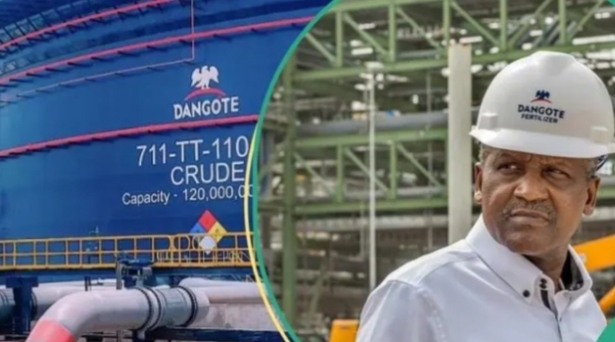
Nigeria’s downstream petroleum sector is facing a fresh dispute over petrol imports as Dangote Petroleum Refinery and Petrochemicals considers restricting Premium Motor Spirit (PMS) sales to major marketers that continue to bring petrol into the country.
The proposed move is being linked to concerns over product quality, alleged blending of imported petrol with refinery-supplied PMS, market transparency and the protection of the Dangote brand.
Reports emerging on Monday, August 31, 2026, indicate that the refinery could begin implementing the restriction as early as this week. However, the measure is not yet a confirmed blanket ban, as further consultations with industry stakeholders and possible regulatory intervention could still affect its implementation.
Why Dangote Refinery Is Considering The Restriction
The immediate concern reportedly centres on the alleged practice of some marketers mixing imported PMS with petrol purchased from the Dangote Refinery before distributing the resulting product into the Nigerian market.
The refinery is concerned that once products are blended or subsequently handled by third parties, consumers may be unable to determine whether the petrol originated entirely from Dangote or contains imported fuel.
That distinction is particularly important to the refinery because it says the quality of its products could be affected in the public perception if petrol of uncertain quality is mixed with its products and sold through the same distribution channels.
A source familiar with the refinery’s position said the company had invested heavily in producing high-quality petroleum products and was concerned that such investment could be undermined if its petrol was mixed with imported supplies and the resulting product was associated with the Dangote brand.
The refinery has also raised questions about Nigeria’s capacity to independently test and certify imported petroleum products.
According to reports, Dangote expressed concern about the absence of what it considers adequate regulatory laboratory and quality-control infrastructure for independently verifying the specifications of imported PMS entering the Nigerian market.
The issue places additional pressure on the Nigerian Midstream and Downstream Petroleum Regulatory Authority (NMDPRA), which is responsible for regulating petroleum products and the downstream oil sector.
Petrol Imports Rise Despite Higher Local Refining Capacity
The proposed restriction comes at a time when Nigeria is undergoing a major shift in its petroleum supply structure.
For decades, the country depended heavily on imported refined petroleum products because domestic refineries were largely unable to meet national demand. The commencement and subsequent expansion of the Dangote Refinery have, however, changed the dynamics of the downstream market.
The refinery now has a crude oil processing capacity of 700,000 barrels per day following maintenance and expansion work completed in February 2026. The increase from 650,000 barrels per day has enabled the facility to supply significantly more refined products to the Nigerian market while also expanding exports.
Despite the growth in domestic refining, petrol imports have increased sharply in recent months.
Data cited by the Centre for the Promotion of Private Enterprise showed that average daily PMS imports rose from about 5.9 million litres in May 2026 to 18.1 million litres in June before climbing further to 19.7 million litres in July.
The increase represents a 234 per cent rise between May and July.
At the same time, CPPE said the share of imported petrol in market receipts increased from 12.4 per cent in May to 43.3 per cent in July, while the market share of domestic refineries declined from 41.5 per cent to 25.8 per cent over the same period.
The figures have triggered fresh debate over whether petrol imports should continue at current levels when Nigeria has significantly greater domestic refining capacity.
EIA Highlights Dangote’s Growing Impact
The argument over imports is also unfolding against the backdrop of a dramatic increase in Nigeria’s refined petroleum exports.
The United States Energy Information Administration (EIA) said in an August 24 analysis that Nigeria’s seaborne petroleum product shipments averaged 561,000 barrels per day in the second quarter of 2026.
That figure was more than seven times Nigeria’s annual average of 79,000 barrels per day recorded in 2023, before the Dangote Refinery became operational.
Of the 561,000 barrels per day shipped during the second quarter, about 350,000 barrels per day were exported, compared with an annual average of only 46,000 barrels per day in 2023.
The EIA also reported that Nigeria’s seaborne imports of petroleum products fell to less than 130,000 barrels per day in the second quarter of 2026, compared with nearly 400,000 barrels per day in 2023.
Domestic shipments within Nigeria also increased substantially, reaching 211,000 barrels per day in the second quarter, compared with 81,000 barrels per day in 2025 and just 33,000 barrels per day in 2023.
The development has strengthened arguments that Nigeria can increasingly rely on locally refined petroleum products rather than imports.
Dangote Refinery Expands Global Reach
Beyond the Nigerian market, Dangote Refinery has also established a growing presence in international petroleum markets.
Nigeria’s exports of refined products to Europe increased significantly in the second quarter of 2026, with shipments averaging 130,000 barrels per day, compared with 40,000 barrels per day in 2025 and 15,000 barrels per day in 2023.
The refinery has also become a major supplier of aviation fuel to Europe. In July, Dangote supplied more than 400,000 tonnes of jet fuel to the European market, accounting for roughly one-fifth of the continent’s imports for the month and making it Europe’s largest external supplier for a second consecutive month, according to data cited by the refinery.
These developments have placed the refinery at the centre of Nigeria’s attempt to move from a predominantly import-dependent petroleum market towards one driven increasingly by domestic refining and exports.
Marketers Raise Concerns Over Supply
While the proposed restriction is aimed at protecting product quality and the refinery’s commercial interests, it could create new challenges for petroleum marketers.
Some marketers reportedly fear that restrictions on certain loading arrangements could increase their logistics costs, particularly where they have to move products by road rather than through coastal transportation.
A report said the refinery had restricted coastal loading for marketers holding import permits, with affected operators reportedly being directed towards gantry loading using trucks.
Marketers warned that increased transportation costs could ultimately be passed on to consumers through higher petrol prices.
The situation is occurring alongside another significant development in the petrol market.
Dangote Refinery recently increased its petrol gantry price to ₦1,265 per litre from ₦1,200, representing a ₦65 increase per litre. Its coastal PMS price also rose from ₦1,582,380 to ₦1,669,545 per metric tonne.
The price adjustment was the refinery’s third petrol price increase within eight days, bringing the cumulative increase during the period to ₦100 per litre.
Wider Implications For Nigeria’s Fuel Market
The dispute goes beyond the commercial relationship between Dangote Refinery and petroleum marketers. It touches on a broader question about how Nigeria should manage fuel imports now that the country has substantial domestic refining capacity.
The CPPE has called for petroleum import licences to be tied to clearly verified domestic supply gaps. Its position is that imports should complement local production when there is a genuine shortfall rather than compete directly with available domestic output.
The organisation warned that uncontrolled or poorly explained import approvals could discourage investment in domestic refining, reduce refinery utilisation and undermine efforts to conserve foreign exchange.
For consumers, however, the key concern will be whether the dispute affects petrol availability and prices.
If Dangote eventually restricts sales to major marketers that continue importing PMS, affected companies may have to reconsider their sourcing strategies. They could either increase purchases from domestic refiners, continue importing under their existing licences where permitted, or adjust their distribution arrangements.
For now, the proposed restriction remains subject to further consultations and possible intervention.
What is clear is that Nigeria’s petrol market is entering a new phase in which domestic refining capacity, fuel imports, product quality, pricing and competition are increasingly becoming intertwined.
With Dangote Refinery expanding production and exports while petrol imports continue to rise, the outcome of the latest dispute could have significant consequences for marketers, regulators, domestic refiners and ultimately Nigerian motorists.