A senior Hamas delegation has held talks with Egypt’s intelligence chief, Hassan Rashad, as diplomatic efforts intensify to move forward with U.S. President Donald Trump’s proposed framework for ending the Gaza conflict.
The meeting, held on Sunday, August 16, 2026, comes as Washington and regional mediators push to resolve disagreements over the implementation of the Gaza roadmap, particularly the proposed disarmament of Hamas and the withdrawal of Israeli forces from the territory.
Egypt’s state news agency, Middle East News Agency (MENA), reported that the Hamas delegation was led by Khalil al-Hayya, the group’s newly elected political bureau chief. The talks focused on ways to advance the implementation of the post-war arrangement and address obstacles that have prevented the plan from moving into its next phase.
According to MENA, the Hamas delegation reaffirmed its commitment to completing Trump’s Gaza plan.
The discussions are taking place against the backdrop of a fragile ceasefire and continuing disagreements between Hamas and Israel over which steps should come first.
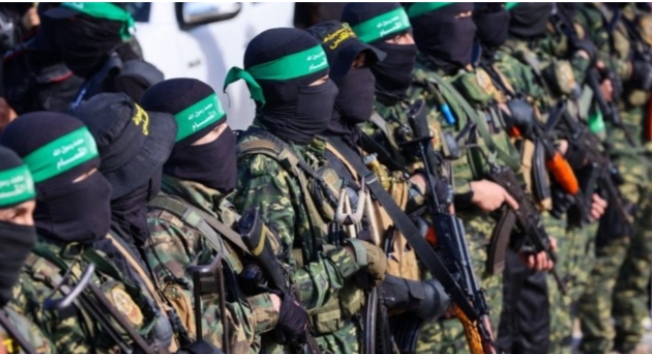
Hamas has previously indicated that it is prepared to surrender its weapons under the proposed arrangement. The move would form part of a broader transition under which Gaza would be administered by a Palestinian technocratic body rather than Hamas.
The U.S.-backed framework envisages the gradual transfer of authority in Gaza, the disarmament of armed groups, an Israeli military withdrawal and the eventual reconstruction of the devastated territory.
However, implementation remains complicated by a fundamental disagreement between the two sides.
Israeli Prime Minister, Benjamin Netanyahu, has insisted that Hamas must be completely disarmed before Israel withdraws its forces from Gaza. Hamas, meanwhile, has argued that Israel must fulfil its own obligations under the ceasefire, including ending military operations and withdrawing its forces, before the group proceeds with the disarmament process.
The disagreement over sequencing has emerged as one of the biggest obstacles to the implementation of the plan.
Recent diplomatic efforts suggest that Washington and regional mediators are attempting to bridge that gap rather than allow the broader agreement to collapse.
Reuters reported on Sunday that Trump’s envoys, including Jared Kushner and Gaza peace envoy, Nickolay Mladenov, were also engaged in diplomatic meetings in Cairo with representatives of Egypt, Qatar and Turkey. The discussions are aimed at promoting the U.S.-backed roadmap, which calls for Hamas disarmament, an Israeli withdrawal and the establishment of a new civilian Palestinian administration in Gaza.
The timing of the Hamas-Egypt meeting is also significant because Kushner, Trump’s senior adviser and son-in-law, is scheduled to hold talks in the region as part of the renewed diplomatic push.
The Hamas delegation arrived in Egypt on Saturday evening ahead of the latest round of discussions.
A Hamas official said the delegation’s talks with Egyptian officials would include recent developments in the negotiations and efforts to ensure that Israel complies with the terms of the agreement.
The official also said Hamas intended to brief Egyptian mediators on what it described as Israeli violations of the ceasefire.
Hamas has maintained that it is ready to implement the agreement once Israel demonstrates its own commitment to the proposed arrangements.
The group’s position reflects the central dispute surrounding the plan: whether Hamas should disarm before an Israeli withdrawal or whether the two processes should occur simultaneously or in stages.
The issue has become particularly important because the proposed Gaza administration would require the transfer of control from existing structures to Palestinian technocrats.
The National Committee for the Administration of Gaza, a body made up of Palestinian technocrats, has been envisaged as a key part of the transition. Earlier developments indicated that the committee would eventually assume responsibility for civilian administration while the wider international framework would oversee security and reconstruction arrangements.
The Trump administration’s Board of Peace has also presented a 15-point roadmap designed to complete implementation of the wider Gaza peace framework. The roadmap includes phased disarmament of Hamas and a phased Israeli withdrawal toward the perimeter of the Gaza Strip.
Mladenov, the Board of Peace’s high representative for Gaza, is expected to play an important role in the discussions. Reports indicate that efforts were being made to arrange a meeting involving Hamas negotiators, Mladenov and U.S. officials during Kushner’s regional visit.
Such a meeting could provide an opportunity for the parties to address some of the practical difficulties surrounding the agreement.
Egypt, Qatar and Turkey have remained central to the mediation efforts, with contacts continuing among the three countries and the parties involved in the conflict.
The diplomatic activity comes as the humanitarian and security situation in Gaza remains extremely fragile.
Despite the existence of a ceasefire framework, violence and allegations of violations have continued, complicating attempts to establish the conditions necessary for reconstruction and political transition.
The proposed U.S. plan seeks to move beyond the immediate ceasefire by creating a structure for governance, security and reconstruction. But the success of that process depends heavily on whether Israel and Hamas can agree on the order and timing of their respective obligations.
Israel has continued to maintain that Hamas cannot retain its military capabilities if a lasting settlement is to be achieved.
Netanyahu has repeatedly rejected any arrangement that would require Israel to withdraw while Hamas remains armed, making complete disarmament a central Israeli demand.
Hamas, on the other hand, has expressed willingness to move towards disarmament within the framework of the proposed agreement but has continued to demand that Israel honour its commitments as part of the ceasefire.
The renewed Egyptian diplomacy therefore represents another attempt to close the gap between the two positions.
Kushner’s expected meetings with Israeli and Egyptian officials could further test whether the Trump administration can persuade the parties to accept a practical sequence for implementing the roadmap.
The broader plan has already encountered significant resistance in Israel. The Israeli Government has raised concerns about the terms and has maintained that its security requirements must be addressed before any full withdrawal.
At the same time, Hamas appears to be seeking assurances from mediators that implementation will be mutual rather than dependent solely on concessions from the group.
The coming days could therefore prove crucial for determining whether the diplomatic initiative gains momentum or remains stalled.
For Egypt, which has played a major role in Gaza diplomacy throughout the conflict, the latest discussions provide another opportunity to bring the competing positions closer together.
For Washington, the challenge is even broader: securing enough agreement from Israel, Hamas and regional mediators to translate the 15-point framework from a diplomatic proposal into an operational plan.
The Hamas-Egypt talks are consequently being closely watched as part of a wider diplomatic effort involving the United States, Israel, Qatar and Turkey.
Whether the discussions can resolve the disagreement over Hamas’s disarmament and Israel’s military withdrawal remains uncertain. But the participation of senior Hamas officials, Egyptian intelligence authorities and U.S.-backed mediators indicates that diplomatic efforts to revive the Gaza plan are continuing despite the substantial obstacles.