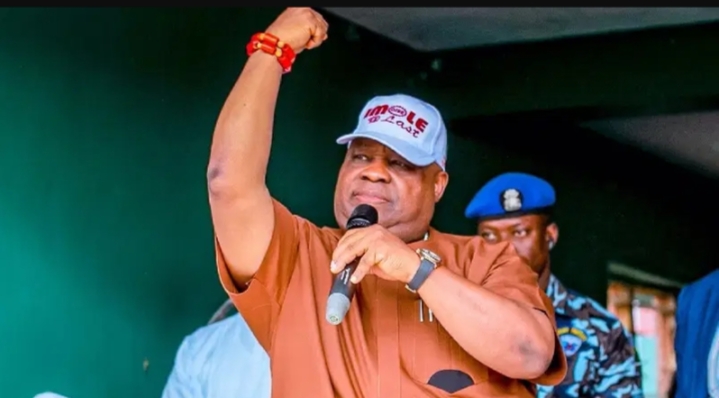
Governor Ademola Adeleke’s victory in the Osun State governorship election has triggered a wave of congratulatory messages from prominent political figures, with former Bayelsa State Governor, Henry Seriake Dickson, Minister of Aviation and Aerospace Development, Festus Keyamo, former Senator, Ben Murray-Bruce, former Kogi State Senator, Dino Melaye and former Lagos State Labour Party governorship candidate, Gbadebo Rhodes-Vivour among those who have hailed the outcome.
The politicians reacted in separate messages shared on Sunday, following Adeleke’s victory in Saturday’s governorship poll.
While their reactions differed in tone and emphasis, the political figures described the result as important for democracy and the people of Osun State. Some also urged political actors to respect the decision of voters and work towards maintaining peace and stability in the State.
Adeleke secured 511,067 votes to defeat his closest challenger, Bola Oyebamiji of the All Progressives Congress (APC), who recorded 444,815 votes.
The result represents a fresh electoral mandate for Adeleke and gives the Accord Party another opportunity to continue governing Osun State.
Dickson Hails Osun Voters
Dickson was among the first political figures to congratulate Adeleke, describing the Governor’s victory as significant not only for the Governor and his supporters but also for Nigeria’s democratic development.
The former Bayelsa Governor said the election had demonstrated that voters could still use the ballot to express their choice despite the difficulties confronting the country’s political environment.
According to him, Adeleke’s victory should serve as a reminder that the electorate remains an important force in determining who governs at the State level.
Dickson also praised Osun voters for what he described as their firm defence of their democratic choice.
He urged politicians who contested the election but failed to secure victory to accept the outcome in good faith and work with the Governor for the benefit of the State.
The former Governor stressed the need for political actors to put the interests of Osun ahead of partisan differences, particularly as the State begins another phase under Adeleke’s leadership.
He wished the Governor and residents of Osun continued peace, progress and prosperity.
Keyamo Congratulates Adeleke
Minister of Aviation and Aerospace Development, Festus Keyamo, also joined those celebrating Adeleke’s return to office.
In his reaction, Keyamo described the Governor’s electoral victory as historic and extended his congratulations to Adeleke.
The Minister’s message was brief but direct, acknowledging the significance of the outcome of the Osun governorship election.
Keyamo’s congratulatory message comes despite the political differences that have characterised electoral contests between the APC and Accord, underscoring the tradition of acknowledging electoral victories after voters have made their choice.
Murray-Bruce Celebrates Former Senate Colleague
Former Senator, Ben Murray-Bruce, also congratulated Adeleke, highlighting their relationship from their time together in the National Assembly.
Murray-Bruce described Adeleke as a friend and former colleague from the eighth Senate before congratulating him on his victory in the Osun governorship election.
His message reflected a more personal tone as he celebrated the Governor’s electoral success and referred to him as his brother.
The former Senator’s reaction added to the growing number of messages from political figures across party and regional lines following the announcement of the election result.
Rhodes-Vivour Describes Result As Triumph
For Rhodes-Vivour, the Osun election carried a broader political message.
The former Lagos State Labour Party governorship candidate congratulated the people of Osun State and described their electoral outcome as a victory against what he termed tyranny.
Rhodes-Vivour argued that the result showed the determination of voters who wanted to make their choices at the ballot box.
He maintained that intimidation, the presence of firearms and financial inducements could not stop a determined electorate from expressing its preference.
His message also went beyond the Osun election, urging Nigerians to study the lessons from the poll ahead of the 2027 general elections.
Rhodes-Vivour suggested that the experience in Osun could provide useful lessons for voters and political actors as the country moves towards another major electoral cycle.
Dino Melaye Calls It Opposition Victory
Former Kogi State Senator, Dino Melaye, also congratulated Adeleke, framing the outcome as a victory for the opposition.
Melaye celebrated the Accord Governor’s success in a message posted on X, declaring that the opposition had won in Osun.
He then congratulated Adeleke and made a reference to the political significance of the result for the opposition.
Melaye’s reaction was notably partisan, contrasting with Dickson’s emphasis on democratic participation and peaceful cooperation after the election.
The former Senator’s message nevertheless reflected the broader political interpretation of the Osun result, particularly its implications for the balance of power between Accord and APC.
Adeleke Secures Fresh Mandate
The congratulatory messages followed the declaration of Adeleke as the winner of the Osun governorship election.
With 511,067 votes, Adeleke finished ahead of APC candidate, Bola Oyebamiji, who polled 444,815 votes.
The margin between the two leading candidates placed the Accord Governor ahead by 66,252 votes, giving him a clear advantage in the final tally.
The result has now shifted attention towards the next phase of governance, with expectations that Adeleke will consolidate his administration’s programmes and respond to the issues that influenced voters during the election.
The reactions from Dickson, Keyamo, Murray-Bruce, Rhodes-Vivour and Melaye also show how the Osun election has attracted attention beyond the State itself.
For Dickson, the key message is the power of the electorate and the need for political opponents to respect the outcome. For Rhodes-Vivour, the result offers lessons about voter determination ahead of 2027. Melaye, meanwhile, sees the victory through the lens of the opposition’s political fortunes.
A common thread running through the different reactions, however, is recognition of Adeleke’s victory and the importance of allowing the electoral process to translate into stable governance.
As Adeleke begins another term, attention will now turn to how his administration responds to the confidence expressed through the ballot and whether political divisions generated during the campaign can give way to cooperation in the interest of Osun residents.
The election has therefore ended not only with a winner but with renewed debate over the strength of Nigeria’s electoral democracy, the power of voters and the responsibilities of political actors after the votes have been counted.