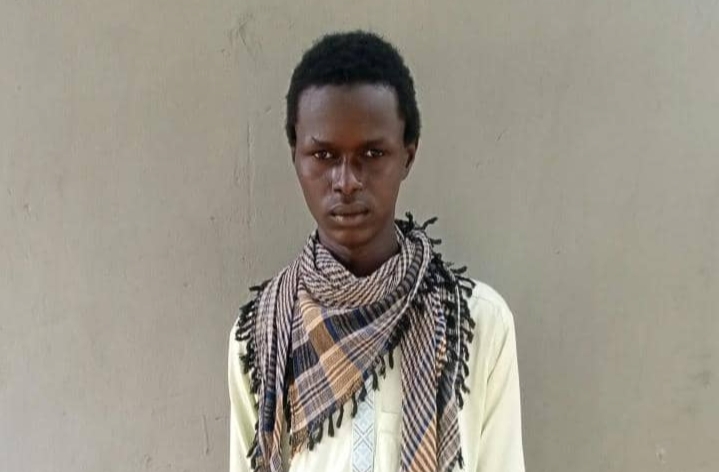
A 25-year-old man suspected to have been associated with the Islamic State West Africa Province (ISWAP) has surrendered to Nigerian troops in Monguno Local Government Area of Borno State after reportedly spending about eight months with the terrorist organisation.
The man, identified as Ali Gambo Kanuri, is said to be from Ngarinna village in Monguno LGA. His surrender was reported on Sunday, August 16, 2026, amid ongoing military operations against Boko Haram and ISWAP elements operating across parts of the North-East.
According to a report attributed to counter-insurgency publication, Zagazola Makama, Gambo joined the terrorist group approximately eight months before his eventual decision to leave. He was reportedly introduced to the organisation by a friend.
The circumstances surrounding his recruitment and subsequent activities within the group were not fully disclosed in the report. However, military sources reportedly said Gambo eventually became dissatisfied with his situation inside the organisation and decided to abandon it.
His decision to leave the group was reportedly influenced by the difficult conditions facing its members as security forces continue to mount operations against terrorist enclaves in the North-East.
The report said Gambo eventually succeeded in leaving the area under terrorist control and made his way to Monguno town, where he surrendered to troops.
He was subsequently taken into custody for processing before being handed over to the appropriate authorities for further action, according to the account.
The development comes against the backdrop of sustained counter-insurgency operations in Borno State, which remains one of the major theatres of Nigeria’s fight against Boko Haram and ISWAP.
Security forces have continued to conduct clearance operations and other counter-terrorism activities in communities and areas where insurgent groups are known to operate.
Borno has remained at the centre of the insurgency in the North-East since Boko Haram’s violent campaign escalated more than a decade ago. The emergence of ISWAP from the wider insurgent movement has further complicated the security situation in the region.
While military operations have targeted terrorist camps, fighters and logistical networks, authorities have also encouraged members of insurgent organisations who are willing to abandon violence to surrender.
Gambo’s case therefore falls within a broader security approach that combines military pressure with opportunities for individuals associated with terrorist groups to disengage from insurgency.
According to the report, people who voluntarily leave terrorist organisations are expected to undergo established screening and processing procedures before decisions are taken on their next steps.
The authorities’ handling of such individuals is particularly important because those who surrender may possess information about terrorist movements, hideouts, supply routes, recruitment methods and other activities. Security agencies are expected to establish the circumstances surrounding each surrender before determining the appropriate course of action.
In Gambo’s case, the available report did not provide details about whether he participated in attacks or other violent activities during the eight months he reportedly spent with ISWAP. It also did not disclose whether he was carrying weapons or other materials when he surrendered.
The report instead focused on his decision to leave the group and submit himself to troops in Monguno.
The development also highlights the pressure that sustained military operations can place on insurgent organisations. According to the account attributed to military sources, difficult conditions within the terrorist group contributed to Gambo’s decision to disengage.
Monguno, where the suspected former ISWAP member reportedly surrendered, is strategically important in Borno’s counter-insurgency campaign because of its location in the wider Lake Chad region and its proximity to areas affected by insurgent activity.
The Nigerian military has repeatedly carried out operations across the North-East in an effort to weaken terrorist networks and restore security to affected communities.
For residents of communities that have endured years of attacks, displacement and disruption caused by the insurgency, the surrender of individuals associated with terrorist groups can provide another avenue for security agencies to obtain information and encourage further defections.
However, the surrender of a suspected insurgent does not automatically establish that the individual has been cleared of involvement in terrorism. Such individuals are subject to security screening and other procedures to determine their identities, backgrounds and roles within the organisations they claim to have left.
In Gambo’s case, authorities are expected to continue the processing of the 25-year-old in line with established procedures for people who voluntarily disengage from terrorist organisations.
The latest development comes as Nigerian security forces maintain pressure on Boko Haram and ISWAP fighters across Borno and other parts of the North-East.
The reported surrender of Ali Gambo Kanuri consequently represents another instance of an individual reportedly abandoning an insurgent group and presenting himself to Government forces rather than remaining within the terrorist organisation.
While the full details of his activities during his reported eight months with ISWAP remain unclear, his surrender is expected to be followed by further screening and investigation by the relevant authorities.