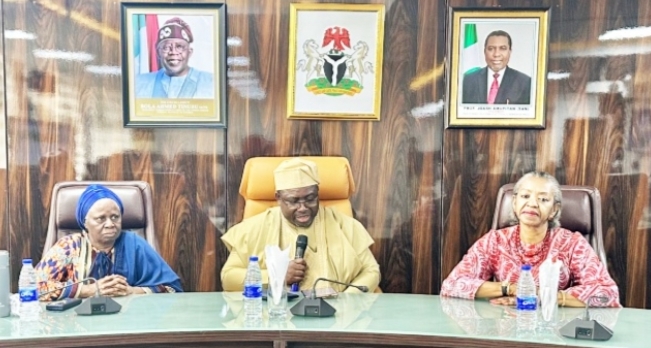
The Independent National Electoral Commission (INEC) has formally shut down its Situation Room for the 2026 Osun State governorship election following the conclusion of the poll and the declaration of Governor Ademola Adeleke as the winner.
INEC Chairman, Professor Joash Amupitan, SAN, announced the closure on Sunday, August 16, 2026, after the Commission completed its central monitoring and coordination activities for the governorship election held across the State.
The development marked the end of the Commission’s intensive election-day oversight operations, during which officials monitored the conduct of the poll, coordinated field activities and followed the collation and declaration of results.
Amupitan, while addressing officials and personnel at the Situation Room, commended them for their dedication and professionalism throughout the electoral process. He particularly acknowledged the sacrifices made by staff who worked for extended hours, often away from their families, to support the successful conduct of the election.
The INEC Chairman said the closure became necessary after the Commission concluded the electoral process and the final result was formally declared in the early hours of Sunday.
He praised personnel at the Commission’s headquarters, its Osun State office, local government offices and various field locations for their contributions to the election.
Amupitan also recognised the work of officials deployed to polling units, as well as members of the technical teams whose responsibilities included supporting the technological and operational components of the election.
According to him, the commitment of the personnel was critical to ensuring that the Commission was able to carry out its responsibilities throughout the election period.
The INEC Chairman also reflected on the relatively peaceful atmosphere that accompanied the election, attributing it to the grace and protection of Almighty God.
However, he cautioned Commission officials against viewing the conclusion of the Osun election as the end of their responsibilities.
Rather, Amupitan described the governorship election as a milestone that should provide important lessons for the Commission as it prepares for the much larger task of conducting the 2027 general elections.
He urged INEC personnel to critically examine the experiences gathered from the Osun exercise, identify areas requiring improvement and apply the lessons to future electoral operations.
“Let us learn from our experience, refine our strategies and approach the upcoming national task with renewed vigour and absolute neutrality,” Amupitan said.
He further urged officials to remain vigilant, transparent and professional while carrying out their duties, stressing that neutrality must remain central to the Commission’s activities.
The Chairman reminded INEC personnel that the electoral body occupies a critical position in Nigeria’s democratic system and therefore must continue to earn and maintain public confidence.
He called on staff to remain committed to their responsibilities and recognise their role as custodians of the country’s electoral process.
The Osun governorship election was closely watched nationally because of its significance ahead of the 2027 general elections. The contest featured candidates from 15 political parties, with the incumbent Governor, Ademola Adeleke, of the Accord Party, seeking another term in office.
Adeleke ultimately defeated his major challenger, Bola Oyebamiji of the All Progressives Congress (APC), in the election.
The Returning Officer for the election, Joshua Ogunwole, announced Adeleke as the winner after the collation of results from the 30 local government areas of Osun State.
Adeleke polled 511,067 votes to secure victory, while Oyebamiji finished in second place with 444,815 votes.
The African Democratic Congress (ADC) candidate, Najeem Salaam, came third after recording 17,180 votes.
The result gave Adeleke a margin of 66,252 votes over Oyebamiji, allowing the incumbent Governor to secure another term in office.
The election recorded more than one million accredited voters, with INEC putting the number of accredited voters at 1,010,684.
A total of 1,005,800 votes were cast during the election, while 985,079 votes were eventually classified as valid.
The Osun election was conducted against the backdrop of heightened political interest and scrutiny, particularly because it is one of the major electoral exercises taking place before Nigeria’s 2027 general elections.
Ahead of the poll, INEC had repeatedly emphasised the importance of technology, voter participation, security and the neutrality of electoral officials in ensuring a credible election.
The Commission had also made extensive preparations for the election, including the deployment of Bimodal Voter Accreditation System (BVAS) devices and other electoral technologies.
The election was initially scheduled for August 8, 2026, before INEC rescheduled it to August 15. The revised date became the eventual polling day for the governorship contest.
The Osun election also attracted considerable political attention because both the Accord and APC campaigns presented the contest as an important test of political strength ahead of the 2027 elections.
Oyebamiji had campaigned on the platform of the APC with a promise to defeat the incumbent administration, while Adeleke sought to retain the governorship based on his record and his appeal to voters across the State.
With the declaration now completed and the Situation Room closed, INEC’s immediate focus will shift from election-day monitoring to post-election assessment and preparations for subsequent electoral assignments.
Amupitan’s remarks suggest that the Commission intends to use the Osun experience as part of its broader review of electoral procedures before the 2027 general elections.
For INEC, the lessons from Osun could prove significant as the Commission prepares to manage a far more extensive national electoral exercise involving presidential, National Assembly, governorship and state assembly contests.
The Chairman therefore called on officials not to become complacent after the conclusion of the Osun poll.
Instead, he urged them to maintain the same level of commitment while strengthening the Commission’s procedures, improving operational efficiency and ensuring that electoral officials remain impartial.
The closure of the Situation Room thus represents more than the formal end of INEC’s central operations for the Osun governorship election. It also signals the beginning of a period of assessment in which the Commission will have to examine what worked, what could have been handled better and how those lessons can improve future elections.
As political parties and candidates begin to respond to the outcome of the poll, attention will increasingly shift toward the political implications of Adeleke’s victory and the preparations for the 2027 general elections.
For Amupitan and the electoral commission, however, the message is clear: the Osun election may have been concluded, but the broader responsibility of strengthening Nigeria’s electoral democracy continues.
The INEC Chairman’s call for greater vigilance, transparency, professionalism and neutrality places those principles at the centre of the Commission’s preparations for the next major electoral cycle.
The successful completion of the Osun exercise, therefore, becomes both an endpoint for the 2026 governorship contest and a reference point for the electoral challenges ahead.