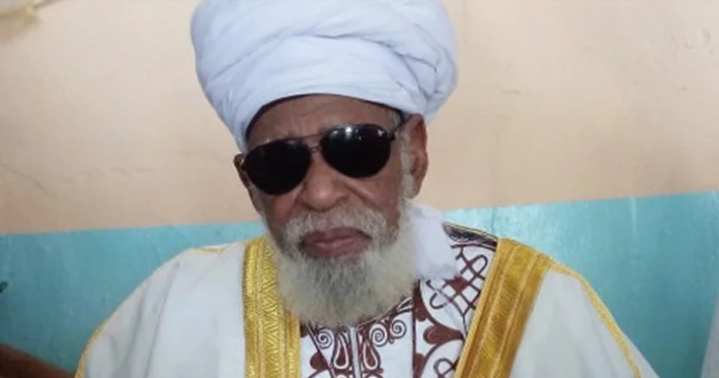
President Bola Ahmed Tinubu has received a delegation of the Supreme Council of Tijaniyya worldwide at the Presidential Villa in Abuja, with the Islamic leaders visiting to offer condolences following the death of prominent Nigerian scholar and Tijaniyya leader, Sheikh Dahiru Usman Bauchi.
The delegation, which included representatives from Algeria, Nigeria and Senegal, was also accompanied by members of the Sheikh Dahiru Bauchi Foundation. The group was led by Khalifa-Sheikh Dahiru Usman Bauchi, successor to the late Islamic scholar.
The meeting took place at the State House in Abuja, where the Khalifa of Tijaniyya from Algeria, Sheikh Ali Bin Arabi, delivered a formal message of condolence to President Tinubu.
The visit highlights the wider regional significance of Sheikh Dahiru Bauchi’s death, particularly within the Tijaniyya community, whose religious and cultural influence extends across Nigeria and other parts of Africa.
According to a statement issued on Friday by Sunday Dare, Special Adviser to the President on Media and Public Communications, the delegation came to sympathise with President Tinubu over the passing of the revered cleric.
During the meeting, Sheikh Ali Bin Arabi reflected on the longstanding relationship between Nigeria and Algeria, noting that the two countries share important social and economic similarities.
He also emphasised the importance of preserving the spiritual relationship between both nations.
“We will continue to pray for the sustenance of the spiritual relationship between Nigeria and Algeria,” the Algerian Tijaniyya leader said.
Sheikh Ali Bin Arabi further prayed for peace and love in Nigeria, while asking for physical and spiritual wellbeing for President Tinubu.
The delegation’s presence at the Presidential Villa also underscored the cross-border dimension of the Tijaniyya movement and the esteem in which Sheikh Dahiru Bauchi was held among its followers beyond Nigeria.
Responding to the delegation, President Tinubu expressed appreciation for the condolence visit and acknowledged the significance of the loss suffered by the Tijaniyya community.
The President described the late scholar as a father figure and an important religious leader whose death had left a major void.
“We miss our father, Sheikh Dahiru Bauchi. He was a beloved father and a great leader,” Tinubu said.
The President also praised the Tijaniyya Movement for its religious and spiritual activities, particularly its contribution to the propagation of Islam across Africa and other parts of the world.
“I respect you for what you are doing for Islam across Africa and the whole world. May God continue to guide you,” he added.
The meeting represents another engagement between President Tinubu and senior figures within the Tijaniyya Movement. In January 2025, before Sheikh Dahiru Bauchi’s death, Tinubu observed Juma’at prayers alongside Tijaniyya leaders at the Aso Villa Mosque in Abuja. That delegation was led by Khalifa Sheikh Muhammad Mahi Inyass and included Sheikh Ibrahim Dahiru Bauchi, the eldest son of the late Nigerian Tijaniyya leader.
The relationship between the Presidency and the Tijaniyya leadership has therefore continued through different stages, including the period following Sheikh Dahiru Bauchi’s death.
Sheikh Dahiru Usman Bauchi was one of Nigeria’s most prominent Islamic scholars and a leading figure in the Tijaniyya order. He devoted decades to Qur’anic teaching, Islamic scholarship and spiritual guidance, building a significant following in Nigeria and across West Africa.
His influence was not limited to religious preaching. Reports on his legacy have highlighted his contribution to Islamic education and the establishment of Qur’anic schools, as well as his efforts to promote moral instruction, peaceful coexistence and religious learning.
The Voice of Nigeria has described him as a towering Islamic scholar and foremost leader of the Tijaniyya Sufi order, noting that his legacy included a broad network of Qur’anic schools and generations of students who continued his teachings.
The late cleric’s death generated widespread mourning among Muslims, political leaders, traditional authorities and other Nigerians. Reports published after his death described him as a major figure in Islamic scholarship whose influence extended well beyond Bauchi State.
Sheikh Dahiru Bauchi was born on June 29, 1927, and died in November 2025 at the age of 98, according to several reports. Some news reports recorded his death on November 26, 2025, while other reports referred to the early hours of November 27 in connection with confirmation of his passing.
Following his death, President Tinubu personally visited Bauchi to condole with the family, State Government and wider community. During that visit, the Federal Government announced the renaming of the Federal University of Health Sciences, Azare, as Sheikh Dahiru Usman Bauchi University of Health Sciences in honour of the late scholar.
Tinubu described Sheikh Dahiru Bauchi as a great scholar whose work had made a lasting impact on Nigerians. The President said the late cleric had contributed significantly to the spread of knowledge, honesty, integrity and good character.
The decision to honour him with the renaming of a federal institution further demonstrated the level of recognition accorded to his religious and educational contributions.
Members of Sheikh Dahiru Bauchi’s family have also continued to speak about the scale of his influence. During President Tinubu’s condolence visit to Bauchi, the family said the late scholar had mentored and guided millions of Muslims through his teachings and religious activities. They also highlighted his long-standing commitment to Qur’anic education and Islamic scholarship.
The latest meeting at the State House consequently carries both religious and diplomatic significance. The participation of Tijaniyya representatives from Algeria, Nigeria and Senegal demonstrates the international network surrounding the Movement and the late scholar’s standing within it.
For the Nigerian Government, the engagement also provides an opportunity to reinforce relationships with influential religious communities while acknowledging the role of faith leaders in national life.
The condolence message delivered by Sheikh Ali Bin Arabi placed particular emphasis on Nigeria-Algeria relations, while the prayers offered for peace, love and the wellbeing of President Tinubu reflected the traditional role of religious leaders in seeking stability and divine guidance for the country.
President Tinubu, in turn, reaffirmed his respect for the Tijaniyya Movement and its activities across Africa and the wider world.
As the Tijaniyya community continues to mourn Sheikh Dahiru Bauchi, his teachings and institutions remain central to discussions about his enduring legacy. His death marked the end of a long period of religious leadership, but his influence continues through his family, students, followers and the educational structures associated with his work.
The meeting between Tinubu and the Supreme Council of Tijaniyya therefore served not only as a condolence engagement but also as a reaffirmation of the longstanding ties between Nigeria and the wider Tijaniyya community across Africa.