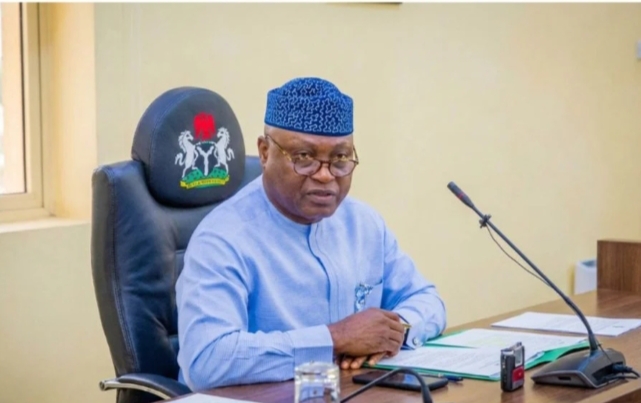
Ekiti State Governor, Biodun Oyebanji, has approved the immediate dissolution of boards, commissions and parastatals across the State, while also terminating the appointments of political appointees as his first term draws to a close.
The development was announced on Sunday, September 27, 2026, by the Governor’s Special Adviser on Media, Yinka Oyebode, in a statement issued in Ado-Ekiti.
According to the statement, the decision is part of the administration’s transition process ahead of Oyebanji’s inauguration for a second term in office on October 16, 2026.
The termination affects political appointees serving in various capacities within the State Government, including Special Assistants, Senior Special Assistants and Technical Assistants.
Oyebode explained that the decision was considered necessary as the Governor’s first four-year tenure gradually winds down ahead of the commencement of his second term.
The latest directive effectively brings the appointments of several political aides to an end as the administration prepares for the next phase of governance in the State.
However, the Governor’s order does not apply to all government-appointed officials and institutions.
Several statutory bodies whose existence and functions are established by law have been excluded from the dissolution.
Among them are the Ekiti State Independent Electoral Commission, the Civil Service Commission, the House of Assembly Service Commission and the Judicial Service Commission.
The governing councils of all state-owned tertiary institutions are also to remain intact, in line with earlier directives issued by the Governor.
The statement further clarified the situation involving some major State agencies responsible for education and local government administration.
The chairmen of the State Universal Basic Education Board, the Local Government Service Commission and the Teaching Service Commission will remain in office despite the dissolution of their respective boards.
In other words, while the boards attached to the three agencies have been dissolved, their chairmen will continue in their respective positions.
Directors-General and Technical Advisers to the Governor are also exempted from the termination of political appointments.
The development therefore represents a restructuring of the political and administrative structure as the Governor prepares to begin his second term, rather than a blanket removal of every official appointed by the State Government.
Governor Oyebanji also expressed appreciation to the affected political appointees for their contributions to his administration and their service to Ekiti State.
He wished the outgoing appointees continued success in their future endeavours.
The announcement comes less than three weeks before Oyebanji is scheduled to be sworn in for another four-year term on October 16.
Oyebanji was returned as Governor in the June 20, 2026 Ekiti State governorship election. The final result declared by the Independent National Electoral Commission confirmed his victory and paved the way for his second-term inauguration.
With the first term approaching its formal conclusion, the dissolution of boards and termination of political appointments marks another stage in the transition towards the Governor’s second administration.
The timing of the directive is significant because political appointments are generally tied to the tenure of the administration that made them. By terminating the appointments before the commencement of the new term, the Governor has created room for the structure of the second administration to be determined.
The affected appointees include political aides who have worked across different areas of the administration during the first term. Their exit also means that appointments to such positions can subsequently be made as the Governor’s second-term administration takes shape.
The exemptions announced by the Governor, however, indicate that institutions with statutory responsibilities will continue operating without disruption.
The State Independent Electoral Commission, for instance, remains outside the dissolution, alongside other commissions responsible for civil service, legislative administration and judicial service matters.
Similarly, the decision to retain the governing councils of state-owned tertiary institutions ensures that their existing administrative structures remain in place.
The continued stay of the chairmen of SUBEB, the Local Government Service Commission and the Teaching Service Commission also provides some continuity in the administration of their respective agencies, even though their existing boards have been dissolved.
Oyebanji’s decision comes as the Governor has been engaging residents and stakeholders across the State ahead of his second term. Recent engagements have focused on development priorities, economic activity and projects that communities expect the Government to address.
The Ekiti State Government has also indicated that the second-term administration will place emphasis on areas including infrastructure, productivity, healthcare, electricity, roads and water, according to recent engagements by the Governor with stakeholders.
The Governor’s latest administrative decision therefore comes at a transition point between his first and second terms, with the October 16 inauguration expected to formally usher in the next phase of his administration.
For the political appointees affected by the directive, their tenure ends with the latest order. For statutory commissions, tertiary institutions and the specifically exempted officials, their existing positions remain unaffected by the restructuring.
The development is expected to be closely watched as Oyebanji moves towards assembling the administrative and political structure that will support his second term in office.