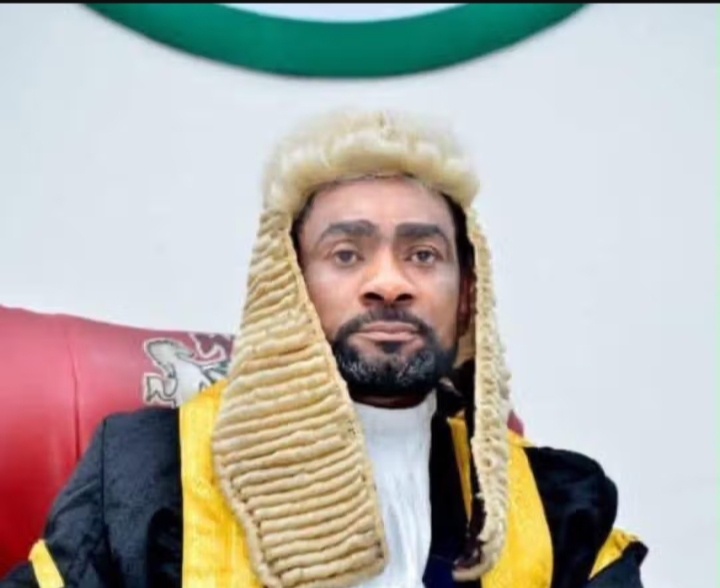
The Speaker of the Edo State House of Assembly, Blessing Agbebaku, has resigned from his position amid reports of an alleged move by some lawmakers to remove him from office.
Agbebaku’s resignation was announced on Monday by Ivy Ebojele, his media aide, in a brief statement posted on Facebook.
Ebojele disclosed that the Speaker had stepped down from the leadership of the Edo Assembly but did not immediately provide details on the circumstances surrounding the decision.
“EDO ASSEMBLY SPEAKER RT HON CHIEF BLESSING AGBEBAKU RESIGNS. DETAILS LATER,” she wrote.
The development has triggered fresh political uncertainty within the Edo State House of Assembly, particularly against the backdrop of reports that some lawmakers had been considering moves to impeach the Speaker.
Agbebaku’s resignation marks a significant development in the leadership of the State legislature, where he had presided over the affairs of the House since June 2023.
Reports emerging from the Assembly also indicate that Yekini Idaiyi, who represents Akoko-Edo II Constituency, has been sworn in as the new Speaker.
However, as of the time of filing this report, details surrounding the reported change in leadership remained limited, while further information was expected from the Assembly.
The reported resignation comes at a politically sensitive period in Edo State, with political activities already intensifying ahead of the 2027 general elections.
Agbebaku, who represents Owan West Constituency, was elected Speaker of the eighth Edo State House of Assembly in June 2023. He emerged after the inauguration of the 24-member legislature and was elected alongside Maria Edeko, who became Deputy Speaker at the time.
The Edo State House of Assembly has 24 members representing constituencies across the State’s 18 local government areas. The current political composition of the House has undergone changes following defections and realignments among lawmakers.
Agbebaku himself became a major figure in Edo politics after moving from the Peoples Democratic Party to the All Progressives Congress. His defection, alongside other lawmakers, helped alter the political configuration of the State legislature.
The Speaker had, in recent months, also faced political challenges within his constituency ahead of the 2027 election.
In April, APC leaders in Owan West Local Government Area rejected a call by former Edo Deputy Governor, Peter Obadan, for Agbebaku to be endorsed as the Party’s sole candidate for the 2027 House of Assembly election. The local Party leaders instead insisted that aspirants should be allowed to compete for the ticket.
Agbebaku subsequently apologised to APC leaders and members in Owan West over previous disagreements within the Party.
The apology was reportedly part of efforts to reconcile with the local Party structure and secure support for his political future. He maintained that he remained interested in contesting the 2027 election and called for unity among Party stakeholders.
Despite those political challenges, Agbebaku secured the APC ticket for the Owan West State Constituency in the Party’s May 2026 primary election.
Reports at the time indicated that he won the primary with 2,846 votes, defeating his closest rival, Atafo Gold, who polled 60 votes.
His political standing within the Assembly had also been shaped by the broader realignment of Edo politics following the emergence of Governor Monday Okpebholo and the subsequent movement of lawmakers into the APC.
The reported resignation therefore comes at a time when the political structure of the Edo legislature is already undergoing significant changes.
It is not yet clear whether Agbebaku’s decision to leave the speakership was directly connected to the alleged impeachment move, whether there were internal political negotiations preceding his resignation, or whether other factors influenced his decision.
The claim that lawmakers were preparing to impeach him remains an allegation at this stage, as no detailed statement from the Edo State House of Assembly explaining the circumstances of his resignation had been made available in the information reviewed.
Similarly, while reports indicate that Yekini Idaiyi has taken over as Speaker, further details are expected regarding the circumstances of his emergence, the lawmakers who supported the change and whether the transition followed the House’s normal legislative procedure.
Idaiyi is a member representing Akoko-Edo II Constituency and has previously been identified as a member of the Edo Assembly. Earlier political reports also listed him among lawmakers who moved into the APC during the State’s political realignment.
The leadership change, if formally confirmed by the House, could have implications for the political direction of the Edo Assembly in the months ahead.
The Edo legislature plays a central role in the State’s political system, with responsibilities including lawmaking, oversight of the executive arm and consideration of Government policies and appointments.
Any sudden change in its presiding leadership is therefore likely to attract considerable political attention, particularly in the build-up to the 2027 elections.
For now, Agbebaku’s media aide has promised that more information will be communicated regarding the resignation.
Until an official statement from the Edo State House of Assembly or other authoritative sources provides further clarification, questions remain about the immediate circumstances surrounding Agbebaku’s departure and the full extent of the reported leadership change.
Agbebaku’s exit would bring an end to his tenure as Speaker of the eighth Edo State House of Assembly, a position he assumed in June 2023 after lawmakers elected him to lead the legislature.
The development is expected to generate further reactions from lawmakers, political parties and other stakeholders in Edo State as more details emerge.