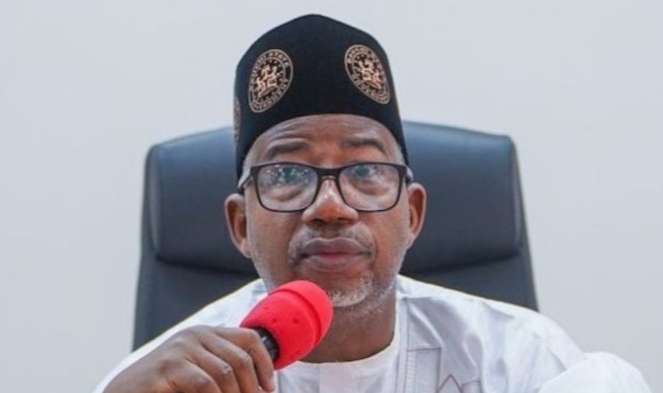
Bauchi State Governor, Bala Mohammed, has urged opposition parties and politicians to stop banking on federal influence as a strategy for winning elections, insisting that candidates must earn the support of voters through genuine political engagement.
Mohammed made the remarks on Monday, August 17, 2026, after casting his ballot at Model Central Primary School, Yalwan Duguri, in Alkaleri Local Government Area of Bauchi State, where local government elections were being conducted.
The Governor said recent developments in Nigeria’s electoral landscape had shown that political parties could no longer assume that support from the Federal Government would automatically translate into victory at the polls.
According to him, politicians who remain at home and expect federal authorities to influence electoral outcomes are miscalculating the realities of Nigeria’s democracy.
Mohammed particularly referenced the recent Osun State governorship election, where Governor Ademola Adeleke retained his position, arguing that the outcome demonstrated the growing importance of voters in determining who wins elections.
The Bauchi Governor maintained that the era when political actors could depend on Government influence to install preferred candidates was gradually becoming a thing of the past.
He said politicians should instead participate fully in elections, mobilise voters and test their popularity at the grassroots rather than boycott polls in anticipation of external assistance.
“If they had listened to me, my advice was that they should have gone ahead to test their popularity. If you sit down at home and think that the Federal Government will give you latitude and leeway to win an election, President Tinubu is showing people that he is a democrat,” Mohammed said.
His comments come amid heightened political activity ahead of Nigeria’s 2027 general elections, with opposition parties and the ruling All Progressives Congress, APC, already positioning themselves for what is expected to be a fiercely contested political cycle.
Mohammed’s remarks also touch on a recurring issue in Nigerian politics: the influence of incumbency and federal power on elections. While political parties frequently seek the support of powerful national figures, the Bauchi Governor argued that such backing should not be mistaken for guaranteed electoral victory.
He pointed to Osun as a recent example of why politicians should take voters seriously.
“You have seen what happened in Osun; the people voted, and their votes counted. People should know that there is no person that is going to install them – there is no monarchy here. It is democratic governance,” he added.
The Governor’s reference to Osun is significant because the election has generated fresh debate among political actors over the strength of incumbency, opposition strategy and the ability of candidates to win elections despite the political weight of the Federal Government.
The result has also triggered reactions from politicians across party lines, with some opposition figures describing the outcome as evidence that the ruling Party can be defeated when opposition forces organise effectively and voters remain engaged.
Mohammed therefore advised political parties to learn from the development instead of relying on assumptions about how federal power would affect the outcome of elections.
He stressed that democracy requires political actors to approach voters directly and persuade them to support their candidates.
For opposition politicians, the message from the Bauchi Governor is particularly relevant as parties prepare for the 2027 elections. The political environment is already witnessing realignments, defections, coalition discussions and disagreements within major political parties.
The Governor’s position is that parties seeking power must build structures at the grassroots and present candidates capable of connecting with voters.
Rather than depending on political arrangements at the federal level, he urged politicians to engage citizens and allow the electorate to determine the outcome.
The development in Osun has further strengthened arguments that Nigeria’s elections are becoming increasingly competitive, even though concerns about electoral manipulation, vote buying, political influence and the use of state resources remain part of the wider national debate.
Mohammed also used the opportunity to reaffirm his administration’s commitment to ensuring that elections in Bauchi State are conducted in an atmosphere that allows voters to freely choose their representatives.
He said his Government remained committed to an electoral process that is open, credible and competitive.
The Governor’s comments came as voters participated in the ongoing local government elections across Bauchi State. His decision to publicly emphasise the importance of voters and electoral competition while participating in the exercise underscores the political significance attached to grassroots elections.
Local government elections are particularly important because they provide political parties with an opportunity to assess their strength at the grassroots and mobilise supporters ahead of larger elections.
For opposition parties, Mohammed’s warning carries an additional message: electoral success cannot simply be negotiated from Abuja or secured through alliances with influential politicians.
Candidates must ultimately convince voters in their communities.
The Governor’s comments also appear to challenge the belief among some politicians that the federal structure can determine the fate of candidates at the state or local government level.
By citing President Bola Tinubu’s approach to democracy and the Osun election, Mohammed argued that politicians should adjust to what he described as a changing political environment.
The statement is likely to fuel further debate among political parties as preparations for 2027 intensify. With several opposition groups seeking to build a formidable challenge to the ruling APC, questions surrounding electoral strategy, alliances and the role of federal influence are expected to remain central to political discussions.
For Mohammed, however, the route to electoral victory is straightforward: parties must go before the people, campaign for their votes and allow the electorate to make the final decision.
His position is that Nigeria is a democratic society, not a monarchy where political leaders can simply designate who succeeds them.
The Bauchi Governor’s remarks therefore amount to a call for politicians to take grassroots mobilisation and voter confidence more seriously.
As political parties begin laying the groundwork for the 2027 elections, the outcome of recent polls such as Osun is likely to influence campaign strategies across the country.
Mohammed’s warning reinforces the argument that political parties cannot afford to sit back and expect federal connections or powerful allies to deliver victory for them.
Instead, candidates will have to build strong local structures, engage voters and convince the electorate that they deserve their mandate.
The Governor’s remarks add to the growing political conversation over the future of Nigeria’s opposition and the extent to which the ruling Party’s federal influence can translate into electoral victories across the states.
For now, Mohammed’s advice is clear: politicians who want to win elections must leave the political sidelines, face the electorate and compete for their votes.
Recent developments, including the Osun election, he argued, should serve as a reminder that voters, rather than political godfathers or federal influence, ultimately hold the power to determine electoral outcomes.
The comments are likely to resonate as Nigeria moves closer to the 2027 general elections, when the strength of political parties, the popularity of individual candidates and the effectiveness of grassroots mobilisation will be put to another major test.