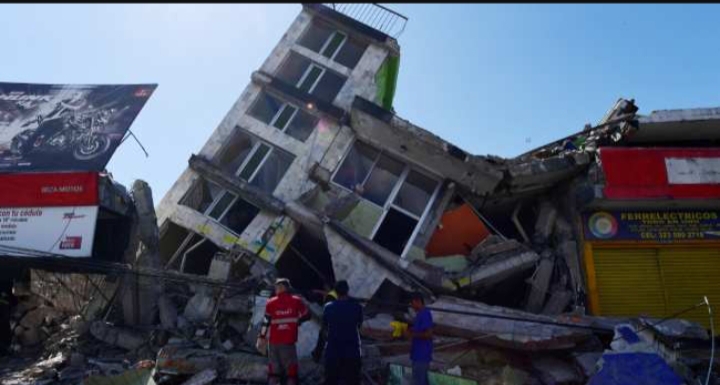
Colombia has declared a state of emergency after a powerful 7.4-magnitude earthquake struck the western part of the country, killing at least 111 people, injuring 87 others and damaging more than 1,000 buildings.
The devastating earthquake struck at about 7:34 a.m. local time on Monday, August 10, 2026, sending residents rushing into the streets as buildings shook and structures collapsed across several parts of the South American nation.
The disaster has triggered a major rescue and relief operation, with emergency workers searching through collapsed buildings for people who may still be trapped beneath the rubble.
President Abelardo de la Espriella announced the emergency measures as authorities intensified efforts to locate survivors and provide assistance to communities affected by the disaster. It was reported that the earthquake has become a major early challenge for the newly inaugurated president.
In a national address from Bogota, the President said Government agencies and emergency resources had been mobilised to protect lives, assist affected communities and deliver relief to areas hit by the earthquake.
The death toll of 111 remained preliminary as rescue teams continued their operations in several locations. Authorities also reported 87 injuries, while more than 1,000 buildings were said to have suffered varying degrees of damage.
Several Cities Hit By Powerful Tremor
The earthquake was centred in the western region of Colombia, with reports placing the epicentre near San José del Palmar in Chocó province. It was also reported that the quake occurred at a depth of about 107 kilometres, while other reports gave slightly different depth measurements as authorities continued to assess the event.
The sparsely populated Chocó region recorded fatalities and significant structural damage. Authorities in the area reported that 12 people had died, while emergency officials continued assessing the extent of the destruction.
Pereira, the capital of Risaralda, was among the areas badly affected by the earthquake. Earlier reports from local authorities indicated that at least 40 people had died across the Risaralda region.
The force of the earthquake was also felt in Manizales, where a section of a prominent cathedral was damaged. Numerous other buildings reportedly sustained structural damage, raising concerns about the safety of residents returning to their homes.
A resident in Manizales described widespread disruption following the tremor, including traffic problems and fears that further shaking could occur.
Buildings Collapse In Cali
Cali, Colombia’s third-largest city, was also among the areas affected.
According to local authorities, at least 20 buildings collapsed in the city, with people reportedly trapped beneath the debris. Rescue teams were deployed to affected locations as authorities worked to determine the number of people still missing.
In Quibdó, the capital of Chocó, residents also reported severe destruction. Images and videos from the city showed damaged structures and buildings reduced to rubble.
Local community leaders said several people were feared dead or injured, while a significant number of residents remained unaccounted for.
The reports of missing people have increased the pressure on emergency agencies, with rescue workers racing against time to search damaged buildings and reach anyone who may still be alive.
Residents Flee Buildings
The earthquake was felt across a large part of Colombia, including the capital, Bogota, where residents were forced to evacuate buildings.
People rushed outside as the ground began shaking, with some leaving their homes still dressed in their night clothes.
Although Bogota recorded limited physical damage compared with some western cities, the strength of the tremor caused widespread alarm among residents.
The earthquake was also felt in neighbouring Ecuador, Panama and Venezuela, according to reports.
The widespread impact of the tremor prompted authorities to carry out safety assessments of buildings and infrastructure in several regions.
Airports Suspend Operations
The earthquake also disrupted transportation and other activities in western Colombia.
Six small airports in the affected region temporarily suspended operations as authorities assessed infrastructure and safety conditions.
Colombia’s football authorities also postponed scheduled matches following the disaster, while emergency agencies focused their attention on rescue and humanitarian operations.
The disruption extended beyond individual communities as emergency services worked to assess roads, buildings, communications and other critical infrastructure.
International Support Offered
The scale of the disaster has drawn offers of assistance from several countries and international organisations.
The United States said it was closely monitoring the situation and was prepared to support Colombia and its people following the earthquake.
U.S. Secretary of State, Marco Rubio, said Washington was following developments after the powerful tremor struck the country.
European Commission President, Ursula von der Leyen, also expressed support for Colombia and said the European Union was prepared to provide additional assistance.
The EU activated its Copernicus satellite service to assist with rescue and emergency-response efforts. Satellite-based information can help authorities identify damaged areas and support teams working to assess the extent of destruction.
Israel, Mexico, Ecuador and France were also among countries reported to have offered assistance to Colombia.
The international response comes as Colombian authorities continue to deal with the immediate humanitarian consequences of the disaster.
Rescue Efforts Continue
The immediate priority for Colombian authorities remains finding people who may still be trapped beneath collapsed structures.
Emergency teams are continuing searches in some of the worst-affected cities while officials assess the condition of damaged buildings and determine where additional assistance is required.
The final human and economic cost of the earthquake is not yet known because rescue operations and damage assessments are still underway.
Authorities have also urged caution as residents in affected areas face the possibility of further tremors and unstable structures.
The disaster has left communities across western Colombia facing a difficult recovery process, with homes, public buildings and other infrastructure damaged by the powerful earthquake.
For the Government of President De La Espriella, the emergency represents one of its first major national crises. Officials have pledged to maintain rescue, relief and humanitarian operations until affected communities receive the necessary support.
As emergency workers continue searching through damaged buildings, authorities are expected to update the casualty figures and damage assessment as more information becomes available.
The earthquake has already become one of the country’s most serious recent natural disasters, leaving families searching for relatives, communities dealing with widespread destruction and rescue teams working to save lives amid the rubble.