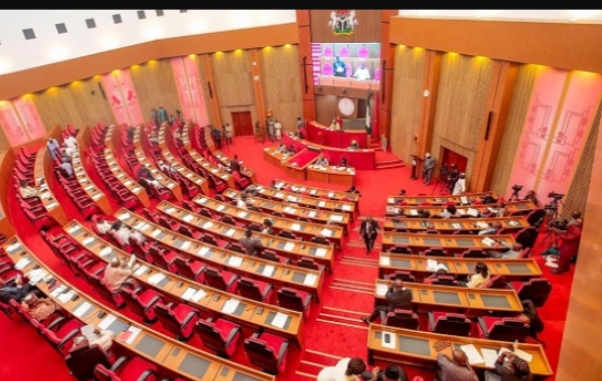
Nigeria’s Senate has handed a fresh 72-hour ultimatum to several key federal agencies, including the Nigerian National Petroleum Company Limited (NNPCL), the Central Bank of Nigeria (CBN), the Niger Delta Development Commission (NDDC), and the Nigerian Upstream Petroleum Regulatory Commission (NUPRC), ordering them to appear before its Committee on Public Accounts to address pending audit queries.
The directive followed the agencies’ failure to honour invitations issued by the committee for a scheduled hearing on Monday, August 3, 2026. Lawmakers said none of the affected institutions appeared before the panel, while no official explanation was submitted to justify their absence.
The Senate Committee on Public Accounts, chaired by Senator Ibrahim Dankwambo, expressed dissatisfaction with what members described as a disregard for the constitutional oversight responsibilities of the National Assembly.
According to Dankwambo, the committee had invited the agencies as part of ongoing efforts to clear outstanding audit issues and improve the efficiency of its oversight functions. He explained that the panel had planned to reduce the backlog of pending audit matters by engaging the agencies in a series of hearings.
He noted that formal invitations had been duly sent ahead of the meeting, but the expected representatives failed to attend.
The committee chairman said the oversight exercise was intended to strengthen accountability across Government institutions and ensure that public agencies adequately respond to issues raised in audit reports.
The absence of the invited agencies, however, drew sharp criticism from lawmakers, who argued that such conduct undermines the authority of the legislature.
Senator Babangida Hussaini condemned the failure of the agencies to honour the invitations, describing it as an act of disrespect toward the National Assembly and its constitutional mandate.
He maintained that the Senate Committee on Public Accounts possesses the legal authority to investigate audit issues involving government agencies and expects full cooperation from public institutions.
According to him, allowing agencies to ignore invitations without consequences could weaken legislative oversight and set a dangerous precedent.
He insisted that the Senate must take decisive action to reinforce the authority of the National Assembly and ensure compliance with future summons.
Another member of the committee, Senator Patrick Ndubueze, also backed tougher measures against the defaulting agencies.
He argued that the institutions should not be granted repeated opportunities after failing to appear without offering any formal explanation for their absence.
Ndubueze said the agencies had an obligation to respond to parliamentary invitations, especially on matters involving public accountability and the management of Government resources.
He stressed that the committee should enforce appropriate sanctions where necessary to discourage similar conduct in the future.
Following deliberations, members of the committee agreed to issue what they described as a final 72-hour notice to the affected agencies.
The committee directed the institutions to appear before it on Thursday, August 6, 2026, to respond to the audit queries and other issues raised by lawmakers.
The panel warned that failure to comply with the fresh directive could trigger further legislative measures within the powers of the Senate.
Although the committee did not publicly disclose the specific audit queries to be addressed during the hearing, the latest summons comes amid heightened parliamentary scrutiny of several government agencies over financial accountability, revenue remittances and compliance with public finance regulations.
The Senate has, in recent months, intensified its oversight activities through various committees, particularly those responsible for finance and public accounts. Lawmakers have repeatedly insisted that Ministries, Departments and Agencies (MDAs), as well as Government-owned enterprises, must provide transparent records relating to public funds and comply with constitutional provisions governing legislative investigations.
The Public Accounts Committee plays a central role in examining audit reports and ensuring that Government institutions properly account for public resources. Its investigations are aimed at promoting transparency, strengthening fiscal discipline and ensuring that recommendations contained in audit reports are implemented.
Constitutionally, the National Assembly is empowered to conduct investigations into the finances and administration of public institutions as part of its oversight responsibilities. Lawmakers have consistently argued that cooperation from Government agencies is essential to maintaining accountability and public confidence in governance.
Attention will now shift to Thursday’s scheduled hearing to determine whether the affected agencies will comply with the Senate’s latest directive.
Should they fail to appear again, lawmakers have indicated that stronger legislative measures could follow as the committee moves to enforce compliance with its oversight mandate.