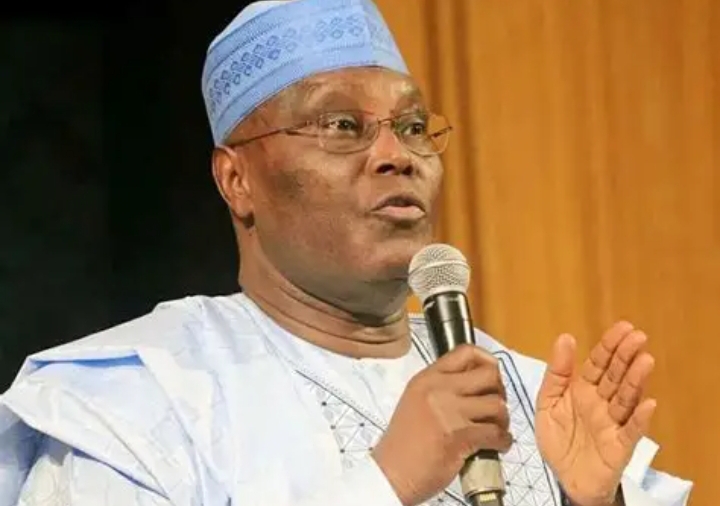
The Presidency has firmly rejected claims by former Vice-President Atiku Abubakar that the Federal Government generated an unaccounted oil windfall of about ₦7.98 trillion under President Bola Ahmed Tinubu’s administration, insisting that the allegation lacks factual basis and challenging the presidential candidate to provide credible evidence.
The latest exchange is the newest chapter in the escalating political and economic war of words between the Tinubu administration and the opposition leader over the management of Nigeria’s economy.
In a statement issued on Sunday, August 2, 2026, Presidential Special Adviser on Information and Strategy, Bayo Onanuga, described Atiku’s calculations as inaccurate and economically deficient, arguing that they ignored key factors that determine Nigeria’s actual oil earnings.
According to the Presidency, the claim of a ₦7.98 trillion oil windfall was based on assumptions that overlooked production costs, revenue-sharing agreements with oil companies, existing crude oil supply commitments, and other financial obligations tied to Nigeria’s petroleum industry.
Presidency Says No Hidden Oil Revenue Exists
Rejecting the allegation, Onanuga insisted there was no undisclosed oil windfall available to the Federal Government.
He explained that any increase in oil revenue resulting from stronger global crude prices is reflected in the monthly allocations shared by the Federation Account Allocation Committee (FAAC), making it impossible for such funds to remain hidden.
He therefore challenged Atiku to publicly provide the calculations and evidence behind his ₦7.98 trillion claim.
According to the presidential spokesman, many analysts wrongly assume that Government revenue can be determined simply by multiplying international crude prices by Nigeria’s daily production figures.
He said such calculations ignore production expenses, contractual obligations, crude ownership by international oil companies, and forward sales used to secure previous financing arrangements.
Atiku Questions Government Borrowing
The Presidency’s response came after Atiku criticised the Federal Government’s continued domestic borrowing despite improved international oil prices.
The former Vice-President argued that Nigeria benefited from significantly higher crude prices between March 1 and July 14, 2026, resulting in billions of dollars in additional earnings.
Using an estimated average production of 1.5 million barrels per day, Atiku claimed Nigeria generated approximately $42.7 million in extra revenue daily.
He estimated the additional earnings at about $5.76 billion, equivalent to roughly ₦7.98 trillion, during the period.
Based on those figures, Atiku questioned why the Federal Government still raised almost ₦5 trillion from the domestic bond market in the first half of 2026.
According to him, such heavy borrowing would ordinarily be expected only if Government revenues had declined rather than increased.
Why the Presidency Disagrees
Responding to the figures, Onanuga argued that international oil prices alone do not determine Government income.
He explained that while the average Brent crude oil price during the first half of 2026 stood at around $90 per barrel, well above the budget benchmark of $64.85, Nigeria failed to achieve its projected production target.
Instead of producing the expected 1.84 million barrels per day, average production stood at roughly 1.6 million barrels daily, reducing the expected revenue gains.
He also noted that not every barrel produced translates directly into Government income because production costs are deducted, oil companies retain contractual shares, and some crude cargoes had already been committed under financing arrangements entered into before the removal of fuel subsidy.
According to him, these factors substantially reduce the amount eventually received by the Federal Government.
Tinubu Administration Defends Economic Reforms
The Presidency also defended the Tinubu administration’s economic reforms, saying critics continue to judge the policies using outdated economic indicators.
Onanuga argued that structural reforms require time before delivering their full benefits and should not be assessed solely by the initial hardship experienced during implementation.
He maintained that Nigeria’s economy has already shown measurable improvements since the exchange-rate reforms.
According to Government figures, Nigeria’s dollar-denominated Gross Domestic Product (GDP) has increased from approximately $253 billion to about $377 billion, while the country’s naira GDP has expanded from around ₦314 trillion in 2024 to nearly ₦530 trillion.
The administration believes these figures reflect gradual economic recovery despite current challenges.
Presidency Rejects Over-Borrowing Claims
Onanuga also dismissed suggestions that Nigeria has borrowed beyond sustainable limits.
He argued that Nigeria’s relatively low revenue-to-GDP ratio continues to limit government spending capacity, making responsible borrowing necessary to finance infrastructure and essential public services.
According to him, ongoing reforms are improving revenue generation, broadening the tax base, reducing financial leakages, and strengthening public financial management.
He maintained that debt sustainability should be measured by internationally recognised indicators rather than political rhetoric.
The presidential aide said Nigeria’s debt-to-GDP ratio remains around 40 percent, while its debt-service-to-revenue ratio continues to improve and remains below 60 percent, insisting that claims of excessive borrowing are misleading.
Political Tension Deepens
The disagreement comes amid increasing political tensions ahead of the 2027 general elections, with Atiku Abubakar remaining one of the Tinubu administration’s most vocal critics.
In recent weeks, both sides have repeatedly clashed over economic reforms, fiscal management, governance issues and national policy.
The latest disagreement also follows recent exchanges over comments made by Cardinal John Onaiyekan after the Catholic Bishops’ Conference of Nigeria expressed concerns about the country’s socio-economic situation during a meeting with President Tinubu.
While presidential aides criticised the Cardinal’s remarks, Atiku defended the bishops, saying religious leaders have a duty to speak truth to those in power.
With neither side backing down, the debate over Nigeria’s oil earnings, borrowing strategy and economic reforms is expected to remain a major issue in the nation’s political discourse in the months leading to the 2027 elections.