Multi-Vehicle Crash On Kara Bridge Causes Hours Of Gridlock On Lagos-Ibadan Expressway
NIGERIA | NATIONAL
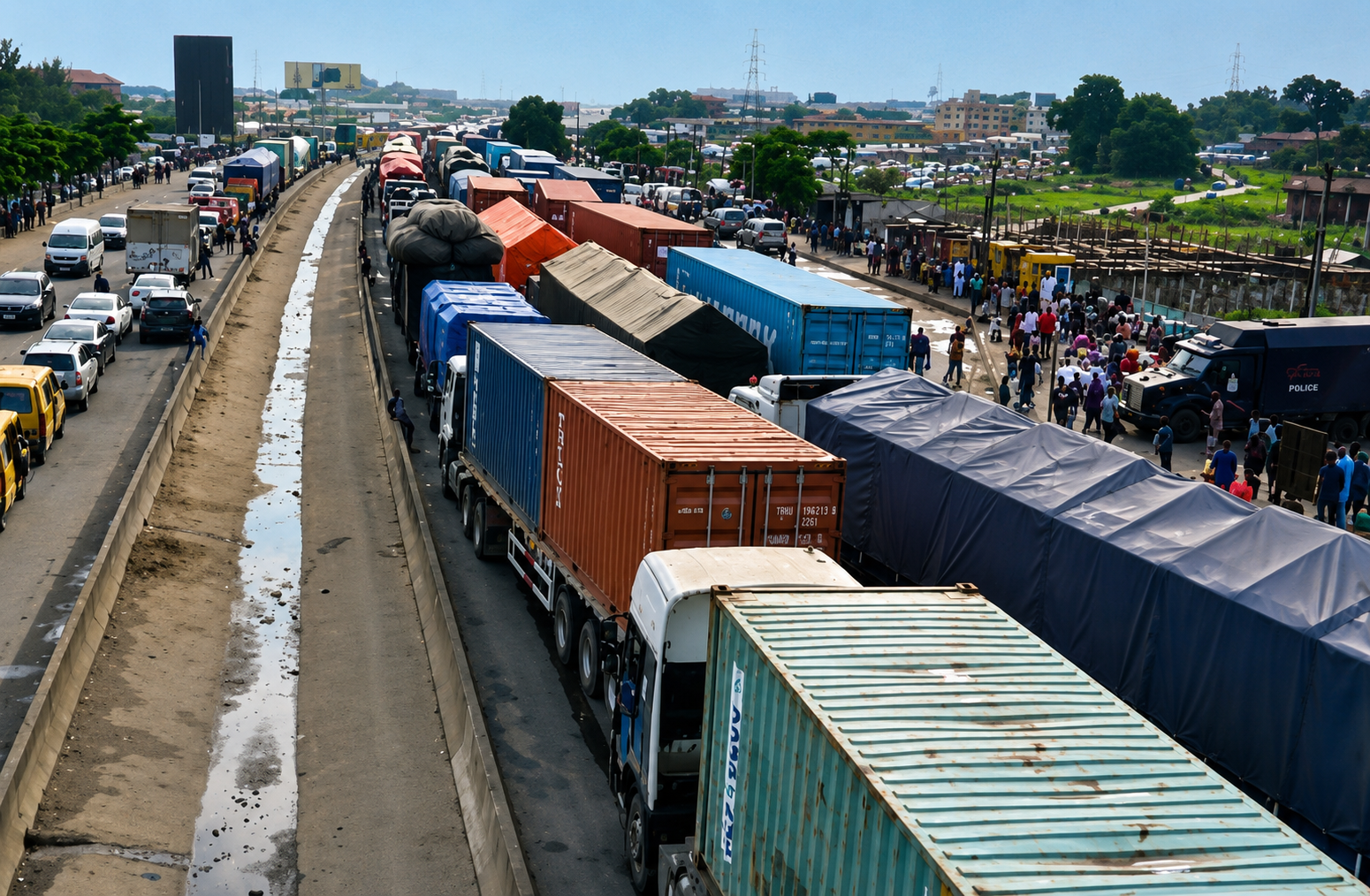
Motorists travelling along the Lagos-Ibadan Expressway on Friday morning faced hours of delay after a multi-vehicle crash on Kara Bridge created one of the worst traffic buildups along the busy highway.
The collision, which occurred shortly after midnight at approximately 12:05 a.m. on Friday, July 24, 2026, involved a Toyota Sienna and several articulated trucks travelling inward Mowe/Ibafo. The impact left the affected section of the expressway partially blocked, causing traffic to build rapidly during the early hours of the day.
According to preliminary findings by the Federal Road Safety Corps (FRSC), the accident was linked to excessive speed and loss of vehicle control. While the full circumstances surrounding the incident are still being examined, officials indicated that the combination of speed and poor vehicle control contributed significantly to the collision.
The crash resulted in extensive disruption to traffic movement along one of Nigeria’s busiest transport corridors. As the morning progressed, queues of vehicles extended far beyond the immediate accident scene, with congestion reaching Otedola Bridge and affecting connecting routes, including the Isheri-Olowora axis and Ogunusi Road.
Many commuters travelling to Lagos for work and other engagements were forced to spend several hours in slow-moving traffic as recovery teams worked to remove the damaged vehicles from the roadway.
Emergency response agencies arrived at the scene shortly after the incident was reported. Personnel from the Federal Road Safety Corps, the Lagos State Traffic Management Authority (LASTMA), the Lagos State Emergency Management Agency (LASEMA), and the Nigeria Police collaborated to secure the area, manage traffic flow, and coordinate recovery efforts.
Tow trucks were deployed to remove the affected vehicles and clear the carriageway in an effort to restore normal traffic movement as quickly as possible.
To reduce the impact of the congestion, traffic officials introduced temporary diversion measures. LASTMA announced that one-way traffic had been opened from Berger towards OPIC Turning to help ease the growing backlog of stranded vehicles.
In an official traffic update, LASTMA advised motorists to remain patient and cooperate with officers managing the situation while clearance operations continued. The agency also urged drivers to obey traffic instructions to prevent additional incidents around the accident scene.
The Federal Road Safety Corps similarly appealed to road users to avoid the Kara Bridge corridor where possible until recovery activities were completed. The agency encouraged motorists to consider alternative routes to reduce pressure on the expressway and allow emergency responders adequate space to complete their work safely.
Although authorities confirmed significant damage to the vehicles involved, officials had not released detailed information regarding casualties at the time of reporting. Investigations into the circumstances surrounding the crash remain ongoing.
Road safety experts continue to stress the importance of maintaining safe speeds, especially when driving on major highways during nighttime hours. Reduced visibility, driver fatigue, and high-speed travel are widely recognised as major factors that increase the risk of serious crashes on expressways.
The Lagos-Ibadan Expressway remains one of the country’s busiest highways, serving thousands of commuters and commercial vehicles every day. Any major incident along critical sections such as Kara Bridge often has widespread consequences for traffic movement across Lagos and neighbouring Ogun State.
Authorities have assured the public that every effort is being made to restore normal traffic flow as quickly as possible. Motorists travelling through the area are encouraged to monitor official traffic advisories, exercise patience, and comply with directions from emergency personnel while recovery operations continue.
The incident serves as another reminder of the need for responsible driving practices and strict adherence to traffic regulations, particularly on heavily travelled highways where a single collision can disrupt movement for thousands of road users.