Andy Burnham Takes Over As U.K. Prime Minister, Unveils 10-Year Plan
Britain has a new Prime Minister after Andy Burnham formally took charge of the government on Monday, promising a 10-year plan to ease the cost-of-living crisis, revive the economy and restore political stability.
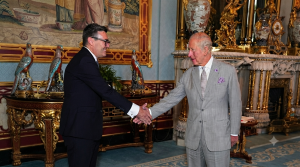
Burnham, 56, assumed office after meeting King Charles III at Buckingham Palace, following the resignation of Keir Starmer, and immediately signalled a shift to the left for the ruling Labour Party.
The former Mayor of Greater Manchester also pledged to re-industrialise Britain and end rough sleeping as he began his tenure amid mounting economic and political challenges.
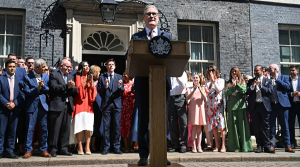
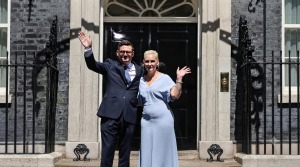
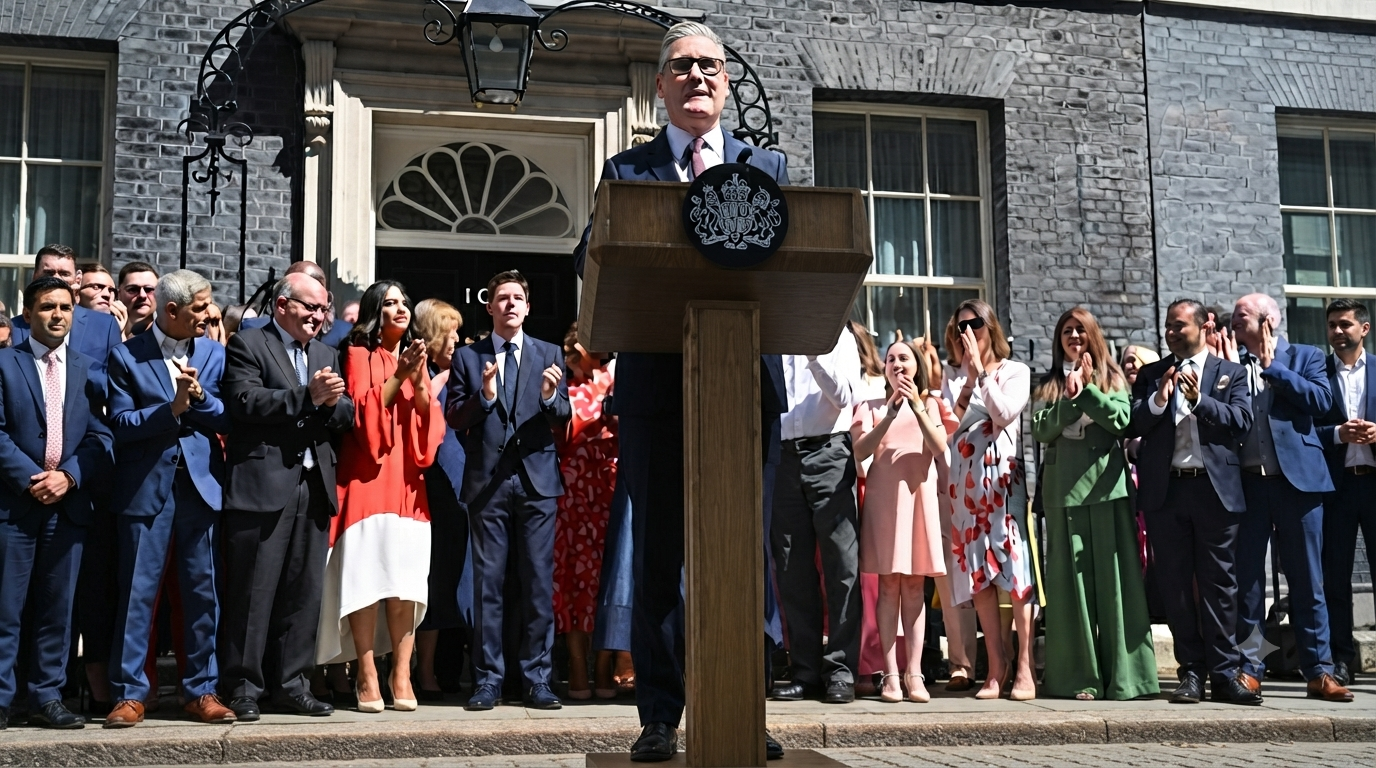
Accompanied by his wife, Marie-France van Heel, Burnham arrived at Downing Street to loud applause from supporters. In his first address outside the famous black door, he noted that he had become Britain’s seventh Prime Minister since the beginning of 2016.
He said the country needed to demonstrate to the world that it could “regain stability” as he promised to create “a new political model” and “build a new economy”.
Shortly after entering 10, Downing Street, Burnham spoke by telephone with U.S. President, Donald Trump, according to a U.K. government official and a White House official who confirmed the conversation on condition of anonymity.
Earlier, Burnham told broadcasters that he would reassure Ukrainian President, Volodymyr Zelensky, later on Monday, saying, “I will be with him 100 per cent.”
In his brief speech, the new Labour leader announced plans to introduce “a new plan for Britain, a 10-year plan”, although he did not provide details.
Burnham also promised immediate measures to ease pressure on households, saying he would “give people some breathing space now, some help with the cost of living”. He said details of the measures would begin to be announced on Tuesday.
He further pledged that one of his first instructions would be aimed at ending rough sleeping, a policy he had previously attempted to implement during his time as Mayor in Northern England, although the effort was not completely successful.
Other commitments included a plan to re-industrialise Britain through public procurement and build more public housing.
Burnham repeated his view that Britain “took some wrong turns” in the 1980s, while promising to devolve power from Westminster and “put life’s essentials back under stronger public control to make them affordable”.
‘Stronger, Fairer’
Starmer left Downing Street earlier on Monday, insisting that his time in office had left Britain in a better position.
“I am confident that Britain is now stronger and fairer than it was two years ago,” he said in his farewell speech.
Burnham, however, faces a long list of challenges and has limited time to make an impact before the next nationwide election, scheduled for 2029.
Rachel Reeves has announced her departure as Finance Minister, while Deputy Prime Minister, David Lammy, has also said he is leaving the government.
The former Greater Manchester Mayor, popularly known as the “King of the North”, was brought in by the Labour Party after Starmer resigned on June 22. Labour MPs viewed him as the Party’s strongest option for curbing the growing influence of Nigel Farage’s anti-immigration Reform U.K. Party.
‘Bigger, Bolder’
Among Burnham’s most pressing challenges are sluggish economic growth, high government borrowing costs, a growing welfare bill and the arrival of irregular migrants in small boats, an issue that has helped fuel support for Reform.
Unstable energy prices linked to the U.S.-Iran war and uncertain relations with the United States under President Trump could also create further difficulties for his administration.
Starmer led Labour to a landslide victory in July 2024 after 14 years of Conservative rule. His time as Prime Minister, however, became increasingly associated with a series of scandals, political missteps and policy reversals.
Burnham will have little room for manoeuvre as he deals with weak economic growth, high public debt and strict financial rules requiring the government to balance spending against tax revenue.
He served as a Member of Parliament between 2001 and 2017 and held ministerial positions under former prime ministers, Tony Blair and Gordon Brown.
However, Burnham’s rapid and uncontested rise to Labour leadership – and his subsequent appointment as Prime Minister through the Party’s large parliamentary majority – has raised questions about how he will deliver on his ambitious promises.
Opposition politicians have also called on him to hold a snap election.
European Commission President, Ursula von der Leyen, said she looked forward to working with Burnham to strengthen the relationship between the European Union and the United Kingdom.
German Chancellor, Friedrich Merz, invited him to Berlin to mark what he described as “the deep bond between us”, while French President, Emmanuel Macron, also congratulated the new British Prime Minister and urged him to give fresh momentum to the partnership between the U.K. and the European Union.
Categories: Politics, World News, UK
Tags: Andy Burnham, UK Prime Minister, Labour Party, Keir Starmer, Downing Street, UK Politics, Cost of Living, Donald Trump, Volodymyr Zelensky
Sources:
UK Government
Downing Street
— Atinuke Otedola and her Editorial Team