Rufai Challenges Ayodele Over Tinubu’s FBI Records
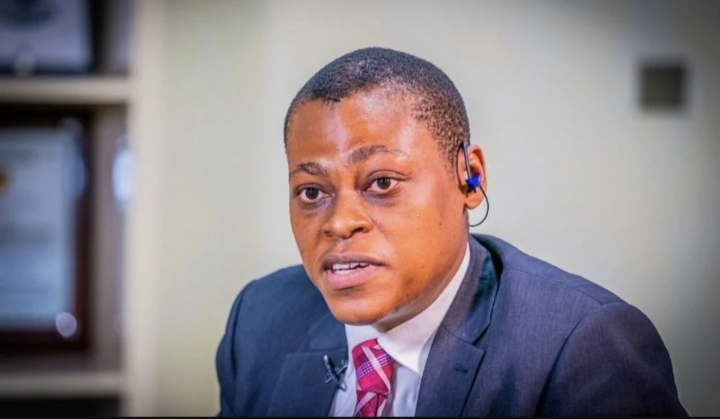
Journalist Rufai Oseni has criticised the Leader of INRI Evangelical Spiritual Church, Primate Elijah Ayodele, over his call on President Bola Tinubu to prevent the release of documents reportedly held by the United States Federal Bureau of Investigation (FBI).
Rufai made his position known during an interview on Tuesday, September 1, 2026, while reacting to Ayodele’s warning that the release of the records could have serious consequences for Tinubu and his administration.
Ayodele had urged the Nigerian President to take every possible step to stop the release of the documents, arguing that their publication could create political and economic uncertainty for the country.
The cleric also linked the matter to Tinubu’s political future ahead of the 2027 presidential election, warning that the release of the records could have significant consequences for the President’s ambition to secure another term.
According to reports on Ayodele’s statement, the cleric warned Tinubu not to underestimate the situation, claiming that powerful interests were behind efforts to make the documents public. He further suggested that the disclosure could affect the stability of the administration and the 2027 election.
However, Rufai took exception to the position, particularly the suggestion that efforts should be made to prevent the documents from becoming public.
The journalist questioned why a religious leader would advise a national leader to conceal information about his past, especially when the matter concerns the President of a country.
“Which kind of shepherd tells people to hide their past when it concerns a nation?” Rufai asked during the programme.
He also questioned whether such advice was consistent with the principles of integrity and accountability expected from a spiritual leader.
Rufai argued that rather than attempting to stop the release of the records, Tinubu should be willing to allow the documents to become public so that Nigerians and the international community can establish what they actually contain.
He suggested that the President could even take the initiative by welcoming the release of the records and using the opportunity to address whatever allegations or questions may arise from them.
“For the interest of sincerity, it is best that he is even the one not getting lawyers to be able to quash the process but championing it to say, okay, release whatever they have of me so that I’ll be able to show to the world that it is not what a lot of people think,” Rufai said, according to reports of his comments.
The journalist’s criticism was not limited to the FBI controversy. He also questioned Ayodele’s credibility and judgement as a spiritual leader, asking whether Nigerians would willingly place their personal affairs in the hands of someone giving such counsel.
“With what Primate Ayodele has said in the past, can you make him shepherd over your life? Can you make him speak words into your life?” Rufai asked.
He maintained that the issue should not be viewed solely as a political battle between supporters and opponents of Tinubu.
According to him, the conduct and reputation of a sitting Nigerian President inevitably have implications for the country and its citizens.
Rufai expressed concern that controversies surrounding the President’s past could expose Nigerians to ridicule in other countries. He argued that whatever happens around a Nigerian president can influence how the country is perceived internationally.
“Whatever President Tinubu does, rubs off on all of us,” he said, stressing that the matter went beyond the individual President and touched on the morality, integrity and strength of Nigeria as a nation.
The controversy centres on records reportedly connected to an old U.S. investigation involving Tinubu. Various reports have described the records as being linked to allegations concerning drugs and financial matters.
However, the reports also stress an important distinction: the existence of investigative records, allegations or an investigation does not automatically mean that a person committed a crime.
A recent report on the controversy noted that questions remain over the full contents of the records because unredacted documents have not all been made publicly available.
The issue has nevertheless gained renewed attention in Nigeria, particularly as the country approaches the 2027 general elections.
Ayodele has warned that the possible release of the records could damage Tinubu’s chances of securing a second term. In his latest warning, he reportedly said the disclosure could create serious political consequences and even affect the wider political environment ahead of the election.
The cleric also claimed that the United States could become one of the major challenges facing the Tinubu administration as the 2027 election approaches. He alleged that there were documents that could be used against the President and urged Tinubu to act urgently.
Ayodele’s position has therefore added another dimension to an already politically sensitive debate about transparency, accountability and the public record of political leaders.
Rufai, however, believes the better approach is transparency rather than attempts to prevent disclosure.
His argument is that if the documents contain nothing capable of substantiating the allegations surrounding Tinubu, their release could provide an opportunity for the President to put the controversy to rest.
The debate also highlights the growing intersection of religion, politics and public accountability in Nigeria, with prominent religious figures increasingly commenting on issues surrounding the country’s political leadership.
For Rufai, the central question is not simply whether the documents will harm or benefit Tinubu politically. Rather, he believes the matter raises broader questions about the standard of integrity expected from leaders and whether information concerning a sitting president should be shielded from public scrutiny.
As the controversy continues, attention is likely to remain focused on what records may eventually be released, what they contain and how the Nigerian Government responds to renewed calls for transparency.
For now, the claims surrounding the alleged FBI records remain politically charged, while Rufai’s criticism has opened another public debate over whether Tinubu should seek to prevent their release or allow the information to emerge and address whatever questions follow.