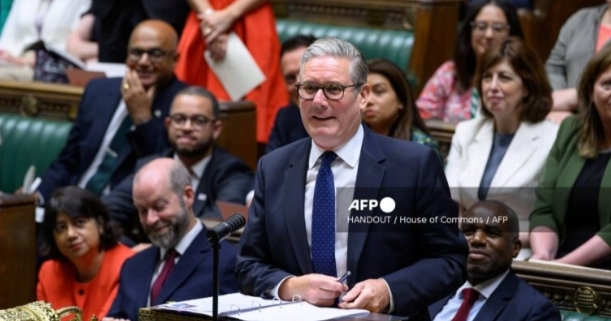
Former British Prime Minister, Keir Starmer, has announced his decision to leave the U.K. Parliament, bringing his 11-year career as the Member of Parliament for Holborn and St. Pancras to an early end.
Starmer announced the decision on Tuesday, September 1, 2026, saying he had spent the summer reflecting on his future and concluded that it was the right time to step away from the House of Commons.
His departure will trigger a by-election in the north London constituency, creating an immediate political test for Prime Minister, Andy Burnham, and the governing Labour Party.
The former Prime Minister initially indicated that he would remain in Parliament as a backbench MP until the next general election, which is expected by 2029. However, he has now reversed that position less than two months after leaving Downing Street.
Starmer made the announcement through the Camden New Journal, the newspaper serving the constituency he has represented since 2015. He later made the statement public on social media.
The decision marks another major stage in the dramatic end of Starmer’s political leadership after his premiership lasted only about two years.
Starmer said his next focus would be international affairs, particularly defence, security, trade and technology, as he seeks to remain involved in issues beyond domestic party politics.
He also said he would continue his longstanding work against violence against women and girls, an issue he has worked on for decades, including before entering Parliament.
The former Labour leader said he was ready to “hand the baton over to a successor”, signalling his intention to move away from the day-to-day political responsibilities associated with representing a parliamentary constituency.
Starmer’s 11 Years In Parliament
Starmer entered the House of Commons in 2015 after winning the Holborn and St. Pancras constituency for Labour.
During his time as MP, he became one of the most prominent figures in British politics, eventually taking over as Labour leader in 2020.
Before entering frontline politics, Starmer had built a career as a barrister and human rights lawyer. He also served as Director of Public Prosecutions from 2008 to 2013.
As an MP, Starmer highlighted several local issues during his tenure, including affordable housing, education, youth safety and efforts to tackle violence.
In his farewell message, he expressed pride in what his constituency team had achieved since he first entered Parliament.
The seat has traditionally been a strong Labour constituency, but political dynamics have changed considerably in recent years. The coming by-election could therefore attract significant attention, particularly because of the growing presence of the Green Party in parts of London.
Reports indicate that Green Party leader, Zack Polanski, could consider contesting the seat, potentially turning the election into an important early test of Labour’s popularity under Burnham.
From Labour Leader To Prime Minister
Starmer became Labour leader in 2020 after the Party suffered one of its worst general election performances under Jeremy Corbyn.
He subsequently repositioned Labour towards the political centre and led the Party into the 2024 general election.
Labour secured a landslide victory, ending 14 years of Conservative-led government and making Starmer Prime Minister.
However, his time in Downing Street became increasingly difficult.
The Government faced criticism over policy reversals, unpopular decisions, internal disagreements and concerns about Labour’s electoral prospects.
The Party also suffered disappointing results in local and devolved elections, while the rise of Reform U.K. created additional pressure on Labour.
By June 2026, the pressure had become overwhelming.
Starmer announced on June 22 that he would resign as Labour leader and Prime Minister, saying he had concluded that he was no longer the right person to lead the Party into the 2029 general election.
He remained in office during the transition before formally leaving Downing Street in July.
His final speech as Prime Minister was delivered on July 20, when he formally tendered his resignation and passed the leadership to Andy Burnham. In the speech, Starmer reflected on taking Labour from its historic 2019 defeat to its landslide 2024 election victory.
Burnham subsequently became Labour leader and Prime Minister.
Burnham Faces His First Parliamentary Test
Starmer’s decision to leave Parliament came on the same day Burnham was making his first major statement to the House of Commons as Prime Minister.
Burnham used his address to promise what he described as substantial change, while presenting a different political approach from his predecessor.
He also paid tribute to Starmer, acknowledging the role his predecessor played in rebuilding Labour and returning the Party to government.
Burnham’s appearance in Parliament therefore coincided with the announcement that the man he replaced was leaving the Commons altogether.
The timing adds an unusual dimension to the transition within the Labour Party.
Rather than remaining on the backbenches and potentially scrutinising the new government from within Parliament, Starmer has chosen to leave Westminster and pursue other interests.
His departure also means Burnham’s government must now prepare for a by-election in a constituency that Starmer represented for more than a decade.
A Break With Former Prime Ministers
Starmer’s decision places him among a smaller group of former British prime ministers who have left Parliament relatively soon after leaving Downing Street.
Former Conservative Prime Minister, Boris Johnson, resigned as an MP shortly after his departure from office, while David Cameron also left the Commons after stepping down as Prime Minister.
Other former prime ministers took a different route.
Theresa May remained an MP for several years after leaving Downing Street, while Rishi Sunak continued to represent his constituency after his Conservative government was defeated.
Starmer’s decision is therefore significant because it effectively brings his domestic political career to an end at a relatively early stage.
His move also means that the next stage of his public life is likely to focus less on electoral politics and more on international issues.
What Comes Next For Starmer
Starmer has made clear that international affairs will be central to his next chapter.
His areas of interest include defence, security, trade and technology, all of which have become increasingly important as Britain navigates a rapidly changing global environment.
He also intends to continue campaigning against violence against women and girls, a cause he has repeatedly highlighted throughout his public career.
His decision to leave Parliament means he will no longer have a direct role in shaping legislation or participating in Commons debates.
Instead, the former Prime Minister is expected to pursue work outside the Westminster political system while maintaining an interest in international affairs and social issues.
For Labour, however, the immediate concern will be the Holborn and St. Pancras by-election.
The contest could provide an early indication of how voters are responding to Burnham’s leadership and whether Labour can maintain its traditional support in the constituency.
Starmer’s exit therefore closes one chapter of his political career while opening another — one that he says will be focused on international affairs, security, technology and his long-running campaign against violence against women and girls.
After 11 years as the MP for Holborn and St. Pancras, Keir Starmer is now leaving the House of Commons, just weeks after ending his turbulent tenure as Britain’s Prime Minister.