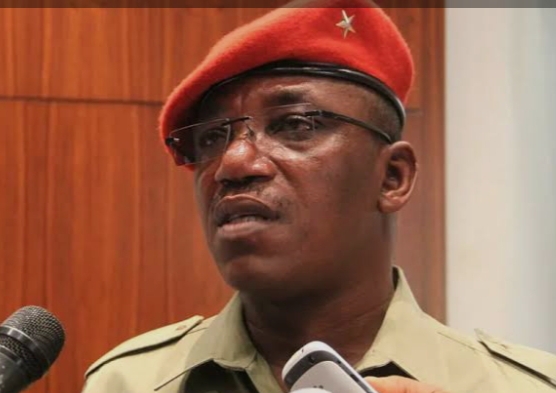
Former Minister of Youth and Sports Development, Solomon Dalung, has thrown his weight behind calls for the reintroduction of fuel subsidy in Nigeria, arguing that the removal of the policy has failed to deliver meaningful benefits to ordinary citizens.
Dalung made the position known on Tuesday during an interview, where he assessed some of the major economic and political challenges confronting the country under President Bola Tinubu’s administration.
The former Minister, who served under ex-President Muhammadu Buhari, said the removal of petrol subsidy had placed a heavy burden on Nigerians without producing corresponding improvements in their living conditions.
According to him, the benefits expected from the policy change have not reached the majority of citizens, while he claimed that a small group of people within Government had continued to benefit from the situation.
“On fuel subsidy, I stand with the reintroduction of fuel subsidy because the withdrawal of fuel subsidy has not benefited Nigerians. Rather, it has benefited the few people in Government,” Dalung said.
His position comes more than three years after President Tinubu announced the removal of petrol subsidy shortly after taking office in May 2023. The decision immediately changed the price structure of petrol and has remained one of the most debated economic policies of the current administration.
The subsidy removal was presented by the Federal Government as a necessary step to reduce the financial burden of subsidising petrol and redirect Government resources towards infrastructure, social programmes and other areas of national development.
However, the policy has also attracted persistent criticism over its impact on the cost of living. Rising transportation expenses, food prices and other household costs have remained central issues in public discussions about Nigeria’s economy.
Dalung argued that the Government should reconsider its approach if the ultimate objective is to ease the hardship experienced by ordinary Nigerians.
Dalung Criticises Tinubu Government Over Corruption
Beyond the fuel subsidy debate, Dalung also took aim at the administration’s handling of corruption.
The former Minister alleged that the Tinubu Government lacked the capacity to confront corruption effectively, making a strong claim about the administration’s foundation.
“This Government has no capacity to deal with corruption because its foundation is on corruption,” he alleged.
Dalung’s criticism formed part of a broader assessment of the Government’s performance and its preparations for the 2027 general elections.
During the interview, he questioned the credibility of the ruling All Progressives Congress (APC) and raised concerns about allegations surrounding some members of the Party’s Presidential Campaign Council.
He argued that the character and records of individuals selected to campaign for political candidates could influence public confidence in the electoral process.
Dalung said the credibility of any transition process should begin with the quality of candidates and the people selected to present their political messages to voters.
He maintained that his criticism should not simply be dismissed on the basis of political affiliation, insisting that Nigerians should judge Government by its ability to deliver on its promises.
Former Minister Supports State Police
Despite his criticism of the Tinubu administration, Dalung commended the President for supporting the establishment of state police.
He described state police as an important development for Nigeria’s security architecture and acknowledged Tinubu’s efforts to push the issue through the National Assembly.
“I will have to commend President Bola Tinubu for insisting and pressuring the National Assembly to have the State Police Act passed,” Dalung said.
However, he cautioned Nigerians against expecting immediate results from the policy.
According to the former Minister, the impact of state police would take considerable time to become evident because the new structure would require proper implementation before Nigerians could begin to experience its full benefits.
“Nigeria should not expect the benefits now because it is going to take a long period,” he said.
His comments highlight the contrast in his assessment of the Tinubu administration. While he criticised the Government over fuel subsidy, corruption and other economic concerns, he acknowledged the President’s support for a policy he believes could eventually strengthen security across the country.
Subsidy Debate Remains Politically Sensitive
Fuel subsidy has remained one of the most politically sensitive economic issues in Nigeria since its removal.
Supporters of subsidy removal have argued that the old system placed an unsustainable burden on Government finances and created opportunities for corruption, smuggling and other abuses within the petroleum sector.
Critics, however, have consistently maintained that removing the subsidy without adequate measures to protect low-income Nigerians would worsen poverty and reduce citizens’ purchasing power.
Dalung has now joined those calling for a reversal, arguing that the policy has not produced the promised benefits for the wider population.
His position also comes at a politically significant period, with Nigeria beginning to move towards the 2027 general elections. Economic hardship, fuel prices, unemployment, security and the cost of living are expected to remain major issues in political debates ahead of the polls.
The former Minister’s remarks therefore add another voice to the continuing national argument over whether Nigeria should maintain the current petrol pricing framework or consider measures that could bring down the cost of fuel for consumers.
For Dalung, however, the immediate priority is relief for ordinary Nigerians.
He maintained that if the withdrawal of subsidy has failed to translate into visible improvements in citizens’ welfare, the Government should reconsider the policy rather than continue asking Nigerians to bear the burden.
His comments are likely to further fuel debate over the economic direction of the Tinubu administration, particularly as Nigerians continue to grapple with the consequences of higher living costs.
Dalung’s position also illustrates the increasingly broad political debate surrounding the subsidy policy, with supporters and critics divided over whether its long-term economic benefits outweigh the immediate hardship experienced by citizens.
As the country approaches the 2027 elections, the question of petrol pricing is expected to remain a major issue for political parties, candidates and voters, particularly among Nigerians whose household budgets are directly affected by transportation and energy costs.