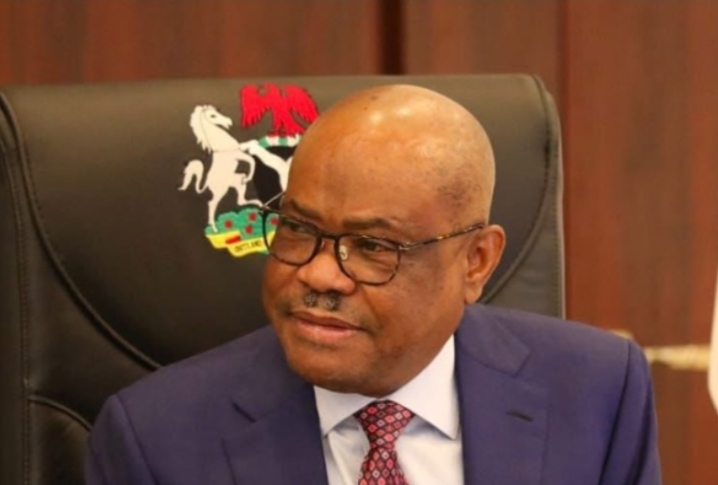
Minister of the Federal Capital Territory, Nyesom Wike, has ordered an immediate crackdown on the conversion of designated green areas, parks and gardens in Abuja into car dealership lots and other unauthorised commercial facilities.
The directive is part of renewed efforts by the Federal Capital Territory Administration to enforce the Abuja Master Plan, protect public spaces and address environmental concerns linked to indiscriminate development across the nation’s capital.
The FCT Administration announced the directive on Wednesday, August 19, 2026, saying Wike had also ordered an investigation into officials allegedly involved in granting approvals for the conversion of areas originally reserved for recreation, greenery and environmental protection.
According to a statement issued by the Minister’s Senior Special Assistant on Public Communications and Social Media, Lere Olayinka, Wike expressed concern over the growing use of spaces designated for public recreation and environmental purposes for private commercial activities.
The Minister specifically directed officials to stop the use of such locations as car dealership lots and ensure that unauthorised activities are removed.
The latest order is significant because Abuja’s green spaces were incorporated into the city’s planning structure to provide recreational areas, preserve the environment and maintain an orderly urban landscape. Previous reports have also raised concerns about the disappearance and conversion of green areas in different parts of the Federal Capital Territory.
A report previously highlighted concerns over the conversion of Abuja’s green spaces, while environmental and urban-planning advocates have repeatedly stressed the importance of protecting parks and other open spaces.
Wike Sets Up Task Force
As part of the latest enforcement action, Wike has constituted a task force to identify green areas being used for purposes other than those for which they were designated.
The task force is expected to enforce the removal of unauthorised commercial activities and monitor the affected locations to prevent operators from returning after enforcement officials have left.
The administration said the directive covers spaces designated for parks, gardens, recreation and other environmentally sensitive purposes.
The Minister’s decision also places greater emphasis on the need to ensure that Abuja’s development remains consistent with its original planning framework.
Wike has, since assuming office as FCT Minister, embarked on several measures aimed at restoring what the administration describes as the master-plan status of Abuja. His administration has targeted unauthorised developments, land-use violations and structures considered inconsistent with approved planning regulations.
In March 2026, for instance, Wike ordered the demolition of an estate in Guzape after officials determined that the land had originally been designated for park and recreation purposes. The Minister said the approval granted for the development would be revoked because the site had been earmarked for a different use.
The latest crackdown therefore represents another stage in the administration’s broader campaign against developments considered to have violated Abuja’s planning regulations.
Civil Servants Under Investigation
Beyond the removal of illegal commercial activities, the FCT Administration is also investigating how some of the disputed approvals were obtained.
The Acting Head of Service of the FCTA, Nancy Sabanti Nathan, has summoned directors in relevant departments to explain their alleged involvement in the approval of green areas for use as car dealership lots.
Those summoned reportedly include the Directors of Parks and Recreation, Environmental Protection, Traffic Management and Urban Affairs.
The investigation is expected to determine whether the approvals were legitimately issued, identify the officials responsible and establish how areas reserved for public and environmental purposes were released for commercial activities.
The probe could also raise questions about the internal approval process within the FCT Administration and the level of oversight exercised by officials responsible for development control and land-use management.
Nathan has served as Acting Head of Service of the FCTA since September 2025, following the death of the former Head of Service, Grace Adayilo. She was previously Permanent Secretary of the Youth Development Secretariat and had also served as Director of Finance and Administration in the office of the FCT Minister.
Flooding Concerns Add Urgency
The renewed focus on Abuja’s green areas also comes amid continuing concerns about flooding and environmental degradation in parts of the Federal Capital Territory.
Urban green spaces perform functions beyond beautification. Parks, gardens, vegetation corridors and undeveloped areas can contribute to water absorption and drainage while helping to reduce the environmental impact associated with rapid urbanisation.
Environmental concerns have previously been raised over developments on waterways and other environmentally sensitive locations in Abuja. Experts and town-planning professionals have warned that uncontrolled development can interfere with natural drainage systems and increase the risk of flooding.
For the FCT Administration, protecting designated green areas is therefore not only a question of preserving the appearance of the capital but also part of broader urban and environmental management.
The Minister has maintained that government-designated spaces should not be converted into private commercial facilities without proper authorisation.
The latest directive is expected to put operators using parks, gardens and other protected areas for vehicle sales and related commercial activities on notice.
Abuja Master Plan In Focus
The enforcement campaign is also likely to renew the debate over the management of Abuja’s original master plan.
The capital was designed around carefully defined land-use arrangements, including residential, commercial, institutional, recreational and green areas. However, population growth, increasing commercial activity and rising demand for land have placed pressure on some of those designated spaces.
Critics have previously questioned the conversion of green areas, while the FCT Administration has maintained that it has the authority to manage land-use designations and take action where allocations or developments violate regulations. Lere Olayinka had previously argued that the administration could reallocate green areas where necessary, while also acknowledging that the process could be abused by officials.
The latest order appears to focus particularly on cases where green spaces have been converted into commercial operations without proper authorisation.
With the newly constituted task force expected to begin enforcement, affected operators could face removal from the disputed locations.
The investigation into civil servants is equally important, as the administration seeks to establish whether unauthorised commercial activities were facilitated through official approvals.
The FCT Administration said the exercise would be sustained through monitoring to prevent renewed encroachment.
For residents and urban-planning stakeholders, the outcome of the crackdown could provide an indication of how seriously the administration intends to protect Abuja’s remaining green spaces.
The move also reinforces Wike’s broader position that development in the Federal Capital Territory must comply with approved land-use regulations rather than allowing public spaces to be gradually transformed into private commercial facilities.
As Abuja continues to expand, the challenge for the FCT Administration will be to balance commercial development and infrastructure growth with the protection of parks, drainage corridors, recreational facilities and environmentally sensitive areas that are central to the capital’s original planning vision.