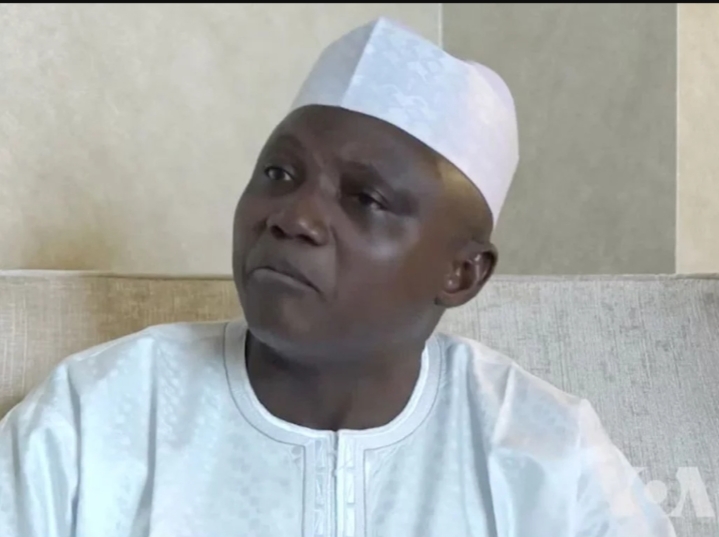
Former presidential spokesman, Garba Shehu, has praised the conduct of the 2026 Osun State governorship election, describing the performance of the Independent National Electoral Commission under its current chairman, Professor Joash Amupitan, as a major improvement in Nigeria’s electoral history.
Shehu, who served as Senior Special Assistant on Media and Publicity to former President Muhammadu Buhari, also compared Amupitan’s early performance with that of former INEC Chairman, Attahiru Jega, whom he credited with conducting what he considered Nigeria’s best election since the disputed June 12, 1993 presidential poll.
The former presidential aide made the remarks while reacting to the outcome of the Osun governorship election held on Saturday, August 15, 2026.
The Independent National Electoral Commission had fixed August 15 for the Osun governorship election as part of its 2026 electoral calendar.
In a statement titled “Where is Professor Amupitan?”, Shehu expressed surprise that the current INEC Chairman had not publicly celebrated the positive feedback generated by the conduct of the election.
According to him, Amupitan’s relative silence after the exercise was unusual, particularly at a time when the electoral commission was receiving commendations over the transparency and technological aspects of the process.
Shehu said he had never met Amupitan and initially had reservations about his appointment as INEC Chairman.
He explained that his concerns were influenced by a 2020 legal brief attributed to Amupitan in which the Professor had described violence in Nigeria as a religiously motivated attack against Christians.
Shehu, however, said the performance of the new INEC leadership during the Osun election had caused him to reconsider his earlier assessment.
He argued that electoral administration in Nigeria had gradually improved under successive INEC chairmen and singled out Attahiru Jega for particular praise.
According to Shehu, Jega provided the country with its strongest election since the June 12, 1993 presidential election, which was won by the late businessman and politician, MKO Abiola, but was annulled by the military government of General Ibrahim Babangida.
Shehu also praised former INEC Chairman, Mahmood Yakubu, saying he succeeded in gaining the confidence of civil society organisations and election observers during his tenure.
However, the former presidential spokesman suggested that Amupitan’s handling of the Osun poll could represent another significant step forward for Nigeria’s electoral system.
The Osun election was particularly important because it served as another major test of INEC’s preparations ahead of the 2027 general elections.
Before the poll, Amupitan had repeatedly assured political parties, candidates, civil society organisations and other stakeholders that the Commission was prepared to deliver a free, fair and credible election.
At an Osun stakeholders’ forum in Osogbo in July, the INEC Chairman said the Commission had completed its logistical, technological and operational preparations for the election.
The Commission also placed significant emphasis on the electronic transmission and viewing of polling-unit results through its INEC Result Viewing Portal, known as IReV.
Shehu specifically highlighted the electronic uploading of election results as one of the features that impressed him about the Osun exercise.
He described the process as a demonstration of improved transparency and said it contributed to the positive assessment of the election.
The former presidential spokesman said the apparent acceptance of the election by civil society groups, observers and other stakeholders was particularly noteworthy.
He therefore questioned why Amupitan had not appeared publicly to acknowledge the commendations directed at the electoral commission.
Shehu’s argument was that public officials in Nigeria often rush to take credit for achievements, but Amupitan appeared to be taking a different approach by maintaining a low profile despite the positive reactions surrounding the election.
He described that restraint as unusual in Nigeria’s public sector and suggested that the INEC Chairman deserved recognition for allowing the electoral process to speak for itself.
Shehu’s comments come against the backdrop of heightened public interest in the credibility of Nigeria’s electoral system ahead of the 2027 general elections.
INEC has already listed the 2027 presidential and National Assembly elections for January 16, 2027, while the governorship and State House of Assembly elections are scheduled for February 6, 2027.
The Commission’s handling of the Osun election was therefore being watched closely by political parties, civil society groups, observers and voters as an indication of what could be expected during the next general election cycle.
Amupitan had also previously stressed the importance of strengthening public confidence in elections through better technology, improved logistics and transparent result management.
In an earlier address on election administration, the INEC Chairman noted that the Commission’s experience from previous elections was providing lessons that would guide preparations for subsequent governorship contests and the 2027 general elections.
Shehu’s latest assessment effectively places the Osun election within that broader progression.
While praising Jega’s record, he argued that Amupitan’s leadership had now produced an electoral process capable of attracting significant commendation.
His remarks also represent a notable shift from his initial skepticism about the appointment of the current INEC Chairman.
Rather than maintaining his earlier reservations, Shehu said the outcome of the Osun election had given him reason to acknowledge what he considered an impressive performance.
The former presidential spokesman consequently challenged Amupitan to step forward and publicly acknowledge the achievement.
He suggested that, after receiving widespread commendation for the election, the INEC Chairman should allow Nigerians to see the person leading the institution responsible for the process.
The statement reflects the growing debate over the role of technology, transparency and institutional leadership in strengthening Nigeria’s democracy.
For many observers, the effectiveness of electronic result transmission and public access to election results remains central to improving confidence in the electoral process.
INEC itself had stated before the Osun poll that its preparations were designed to ensure that the election reflected the lawful choice of voters. The Commission also took steps to test its systems ahead of election day, including mock accreditation exercises and the deployment of BVAS technology.
With the 2027 elections approaching, the performance of INEC in Osun is therefore likely to remain a major reference point in discussions about the future of electoral reforms in Nigeria.
For Shehu, the comparison with Jega’s tenure is significant. His assessment suggests that the current INEC leadership may have begun establishing its own record in an area where public confidence has remained a major concern.
Ultimately, the former presidential spokesman’s message was not simply about the outcome of one governorship election. It was also a call for Nigerians to recognise institutional improvements when they occur and for public officials to allow credible results to speak for themselves.
As preparations gradually shift towards the 2027 general elections, the credibility of the Osun process could become an important benchmark for judging whether Nigeria’s electoral system is continuing to improve or merely repeating the challenges of previous election cycles.