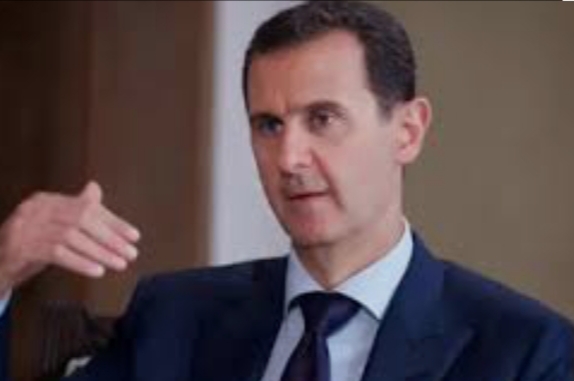
A criminal court in Damascus has sentenced former Syrian President, Bashar al-Assad, to death in absentia over atrocities committed during the country’s devastating civil war, marking a major legal action against the man who ruled Syria for nearly a quarter of a century.
The verdict was delivered on Tuesday, August 11, 2026, by Syria’s Fourth Criminal Court in Damascus. Assad’s younger brother, Maher al-Assad, and their cousin, Atef Najib, were also handed death sentences in connection with crimes committed during the former government’s crackdown on opponents.
The ruling represents one of the most significant attempts by Syria’s post-Assad authorities to establish criminal accountability for abuses committed during the conflict. It is also the first major conviction against Bashar al-Assad himself by a Syrian court since his government collapsed in December 2024.
Assad was not present in court when the judgment was delivered. He fled Syria after opposition forces rapidly advanced on Damascus in late 2024, bringing his long presidency to an end. He and his brother subsequently went to Russia, where Assad has remained outside the reach of the Syrian authorities.
The court found Assad responsible for serious crimes committed during the conflict, including premeditated murder, torture, arbitrary detention and crimes against humanity. Prosecutors and judges linked the former President to the actions of state security and military institutions accused of carrying out widespread repression against civilians.
Judge Fakhareddine al-Aryan announced the judgment during proceedings in Damascus, with the case attracting significant attention inside and outside Syria.
The sentence against Maher al-Assad was similarly delivered in his absence. Maher, who was one of the most powerful figures in the former government, previously commanded Syria’s elite 4th Armoured Division. The military formation was repeatedly accused by opposition groups and international investigators of involvement in brutal operations against areas controlled or influenced by anti-government forces.
The court also sentenced Atef Najib, a cousin of Bashar al-Assad, to death. Unlike the two Assad brothers, Najib was present in court for the proceedings.
Najib became one of the most controversial figures associated with the beginning of Syria’s uprising in 2011. He was the head of the Political Security Branch in Daraa at the time, when security forces responded to protests that had erupted in the southern city.
The Daraa protests became a turning point in Syria’s modern history. Demonstrations began after teenagers were arrested and reportedly tortured over anti-government graffiti written on a school wall. The treatment of the teenagers provoked anger among residents and helped trigger demonstrations against Assad’s government.
Security forces responded with a violent crackdown, and the unrest spread to other parts of the country. What began as largely peaceful protests eventually developed into a complex armed conflict involving government troops, opposition fighters, extremist organisations and foreign military powers.
The war continued for almost 14 years and caused one of the worst humanitarian crises of the modern era. Hundreds of thousands of people were killed, while millions were forced to leave their homes.
Najib’s role in Daraa placed him at the centre of the early crackdown. He was later arrested following the fall of the Assad government and became the principal defendant physically present during the proceedings.
Human rights organisations had previously documented allegations of killings, torture, arbitrary detention and other abuses carried out by Syrian government forces during the conflict. The prosecution of former senior officials has therefore become an important test of whether Syria’s transitional authorities can deliver accountability for crimes committed during the Assad era.
The latest judgment is particularly significant because Assad himself had remained beyond the reach of Syrian prosecutors since leaving the country.
His government collapsed in December 2024 after opposition forces launched a rapid offensive that dramatically changed the balance of power. The fall ended the Assad family’s decades-long dominance of Syria.
Bashar al-Assad had succeeded his father, Hafez al-Assad, in 2000 and remained President until the government’s collapse in 2024. His rule became increasingly associated with repression after the 2011 uprising developed into a nationwide war.
Following the fall of Damascus, Assad and members of his family fled to Russia. Moscow subsequently granted him asylum, creating a major obstacle for Syria’s new authorities, who have sought the return of members of the former ruling family to face legal proceedings.
The death sentence against Assad therefore raises questions about whether the judgment can ever be enforced. Since he remains outside Syria, the verdict is currently largely symbolic unless the former President is extradited or otherwise brought under the jurisdiction of the Syrian authorities.
Legal experts have also pointed to the potential complications the sentence could create for future efforts to secure Assad’s extradition. It is reported that critics view the judgment as potentially symbolic because the former President remains in Russia and is unlikely to be immediately surrendered to Syrian authorities.
Nevertheless, the ruling has been welcomed by people seeking accountability for victims of the former government.
In Daraa, where the 2011 uprising began, the verdict was met with celebrations. Crowds also gathered around the Palace of Justice in Damascus as news of the death sentences spread.
For many Syrians who lost relatives or were displaced during the war, the case represents an attempt to formally acknowledge the abuses they say were committed under Assad’s rule.
The prosecution also carries wider implications for Syria’s transition following the collapse of the former government. The new authorities face pressure to investigate crimes committed during the conflict while preventing the justice process from becoming solely an instrument of political revenge.
The court proceedings against Assad, Maher and Najib are consequently being watched closely as an early indication of how Syria intends to deal with members of the former regime.
The Syrian conflict began in 2011 following the government’s violent response to anti-government protests and eventually became a multi-sided war involving regional and international powers. The fighting devastated cities, destroyed infrastructure and produced millions of refugees and internally displaced people.
Assad’s removal in 2024 ended his family’s direct control of the country, but the consequences of his government’s rule remain deeply embedded in Syria’s political and social landscape.
Tuesday’s verdict now places the former President under a formal death sentence from a Syrian court, although the punishment cannot presently be carried out because Assad is outside the country.
The judgment against him, his brother and their cousin therefore marks a historic moment in Syria’s post-Assad transition, while leaving unresolved the larger question of whether the former President will ever be returned to Syria to face the sentence in person.
For victims and families seeking justice, the verdict provides a formal judicial finding against one of the central figures of Syria’s 14-year conflict. For the transitional government, however, securing custody of Assad and determining how to enforce the sentence remain major challenges.