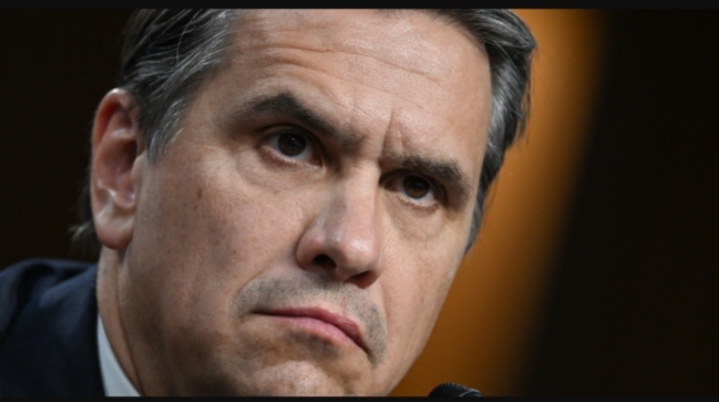
The United States Senate has confirmed Todd Blanche, a former personal lawyer to President Donald Trump, as the country’s attorney general following a closely contested vote that exposed deep divisions over the future independence of the Justice Department.
Blanche was approved 50–49 in the early hours of Saturday, August 8, 2026, narrowly securing the majority needed to take permanent control of the Department of Justice. The vote followed weeks of political uncertainty and objections from some Republican senators who had raised concerns about Blanche’s previous work for Trump and his handling of controversial Justice Department initiatives.
The confirmation formally elevates Blanche from acting Attorney General to the department’s permanent leader. He had been serving in an acting capacity since April, when Trump removed Pam Bondi from the position.
Blanche’s confirmation was particularly significant because of his unusual path to the top law-enforcement post. Before joining the Trump administration, he was part of the President’s private legal team and represented Trump in several criminal cases. His previous relationship with the President became one of the central issues surrounding his nomination.
His supporters argued that Blanche’s experience as a prosecutor and defence lawyer equipped him to lead the Justice Department, while Democrats and some Republicans questioned whether he would be able to separate his responsibilities as Attorney General from his former role as Trump’s personal lawyer.
The narrow Senate vote reflected those concerns. Republican Senators Susan Collins of Maine and Lisa Murkowski of Alaska voted against Blanche, joining Democrats in rejecting his nomination. Senator Bill Cassidy of Louisiana, who had previously expressed serious reservations about Blanche, ultimately voted in favour and helped secure the confirmation.
Cassidy’s decision was particularly important because Republicans hold only a narrow advantage in the Senate. Before announcing his support, the Louisiana Senator had demanded assurances that Blanche would act as Attorney General for the American people rather than as an extension of Trump’s personal legal team.
The confirmation battle was also complicated by a controversial proposal involving a $1.8 billion anti-weaponisation fund. The initiative was intended to compensate people who claimed they had been unfairly targeted by federal investigations and prosecutions under previous administrations.
Critics argued that the proposed fund could potentially benefit Trump supporters, including individuals connected to cases arising from the January 6, 2021, attack on the U.S. Capitol. The issue became a major source of resistance among some Republican senators and threatened to derail Blanche’s confirmation.
Another major concern involved a Justice Department settlement connected to Trump and his tax affairs. Critics questioned provisions that appeared to provide broad protection from future tax audits involving Trump, members of his family and his businesses.
To address Republican concerns, Blanche issued a written order withdrawing the controversial anti-weaponisation fund and clarified that the tax-audit protection would apply only to certain past matters rather than future tax filings. Those concessions helped clear the way for Republican support and ultimately allowed his nomination to proceed to confirmation.
The controversy surrounding Blanche did not begin with his nomination. During his time at the Justice Department, he faced criticism over the handling of investigative records connected to Jeffrey Epstein, as well as questions surrounding the Department’s approach to cases involving Trump’s political opponents.
Democrats have repeatedly accused the Trump administration of using the Justice Department for political purposes. They argued that Blanche’s close history with the President made his appointment particularly troubling at a time when the Department’s independence was already under intense scrutiny.
Senator Dick Durbin, the top Democrat on the Senate Judiciary Committee, was among Blanche’s strongest critics. Durbin argued that the Attorney General should represent the interests of the American people and not function as the President’s personal attorney.
The concerns followed Blanche from his previous career into his confirmation hearings. Before entering Government, he represented Trump in the New York criminal case involving payments connected to adult-film actress, Stormy Daniels. He was also part of Trump’s legal defence teams in federal cases involving classified documents and the former President’s efforts to challenge the outcome of the 2020 presidential election.
Those federal cases were eventually dropped after Trump returned to the White House following the 2024 presidential election.
Blanche’s confirmation therefore marks a significant change from his earlier role as Trump’s private lawyer. He must now oversee the entire Justice Department, an institution responsible for federal law enforcement, prosecution of federal crimes and the administration of justice across the United States.
In accepting the Senate’s decision, Blanche said he was honoured by the confidence Trump had placed in him and expressed appreciation to senators for completing the confirmation process.
He also thanked Justice Department employees, saying the Department’s public servants work daily to uphold the law and protect the country.
Trump, meanwhile, has repeatedly praised Blanche and described him as a highly capable lawyer. The President’s strong support for his former attorney has made Blanche’s confirmation an important political victory for the administration.
However, the 50–49 vote also demonstrates how contentious his appointment remains. With Collins and Murkowski joining all voting Democrats against him, Blanche secured confirmation with virtually no room for error.
His immediate challenge will be to establish his authority over a Justice Department that has become increasingly central to the political battles surrounding the Trump administration.
The confirmation also places renewed attention on the question of how closely the Attorney General should align with the President who appointed him. Blanche’s history as Trump’s personal lawyer means his actions at the Justice Department are likely to receive intense scrutiny from both Congress and the public.
For Trump, however, the Senate vote removes a major uncertainty that had hung over his Justice Department since Bondi’s departure in April. Blanche can now serve as Attorney General without the temporary status that had defined his leadership for several months.
The confirmation closes one of the most politically charged Cabinet battles of the year and puts a former presidential defence lawyer permanently in charge of the Federal Government’s top law-enforcement agency.
The Senate’s 50–49 decision came early Saturday, August 8, 2026, after weeks of negotiations, Republican disagreements and Democratic opposition over Blanche’s independence and his close ties to Trump.