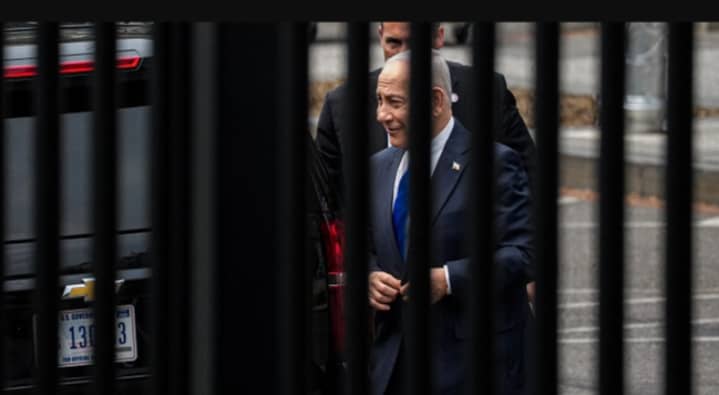
Israeli Prime Minister, Benjamin Netanyahu, arrived at the White House on Tuesday for his first face-to-face meeting with U.S. President, Donald Trump, since the Iran war began, with both leaders expected to address tensions surrounding the conflict.
The talks come as Washington and Tehran observe a pause in fighting following weeks of hostilities, while Israel and the United States seek to manage differences over the direction of the war.
The meeting is expected to focus heavily on the conflict, which began after the U.S. and Israeli strikes on Iran in late February, although Washington has recently indicated that it wants to allow room for negotiations.
Israel has not participated in the latest phase of clashes between the United States and Iran, which erupted earlier this month after an April ceasefire collapsed.
The meeting marks the eighth time Netanyahu and Trump have held discussions since Trump returned to office in early 2025, coming ahead of major political contests for both leaders — Israel’s national elections and the U.S. midterm elections later this year.
Before leaving Israel, Netanyahu said the discussions would cover key issues, particularly Iran.
“We will discuss all the issues on the agenda, first and foremost Iran. Naturally, our goal is to safeguard our security and also to expand the circle of peace around us,” he said.
Upon arriving in Washington, Netanyahu attended a private memorial dinner on Monday night honouring the late U.S. Senator, Lindsey Graham, according to his office. He was also scheduled to attend Graham’s memorial service on Tuesday.
Relations between Trump and Netanyahu had faced strain in April during ceasefire negotiations with Iran, when the U.S. President publicly criticised his Israeli ally.
Trump later described Netanyahu as a “very difficult guy” in an interview, while the Israeli leader dismissed the disagreements as “tactical differences” and maintained that both sides remained united on the war’s objectives.
During Tuesday’s meeting, the leaders were expected to discuss the implementation of a U.S.-backed framework agreement signed between Israel and Lebanon last month, as efforts to apply the deal on the ground have faced difficulties.
The discussions were also expected to include Gaza, where plans to begin reconstruction efforts remain stalled.
Nearly three years after the Israel-Hamas war began, Gaza continues to face a severe humanitarian crisis, while Israel maintains regular military operations against targets it identifies as militants.
*‘No Break’ in Alliance*
Israel’s ambassador to the United Nations, Danny Danon, described Netanyahu’s visit as coming at a “critical time for the Middle East”, accusing Iran of choosing “terrorism over negotiations” and blocking the strategic Strait of Hormuz.
Yonatan Freeman, an international relations expert at the Hebrew University of Jerusalem, said the main purpose of the visit was to counter reports of growing tension between Washington and Jerusalem.
“I think that the main issue… is to show the world, to show Iran, and also even Lebanon and others… that there is no break or any kind of major disagreement between the United States and Israel,” Freeman said.
He said the two leaders had more areas of agreement than disagreement, adding that their differences were mainly about the timing, intensity and immediate objectives of military operations rather than the overall goals.
Freeman also suggested Trump would prioritise discussions on Iran and expanding the Abraham Accords, rather than making Gaza the central focus of the talks.
The Abraham Accords refer to U.S.-brokered normalisation agreements signed during Trump’s first term, which saw Israel establish diplomatic relations with the United Arab Emirates and Bahrain, followed by Morocco.
However, some observers believe the meeting could also address the possibility of reducing Israel’s military presence in parts of the region, including Lebanon, Syria and Gaza.