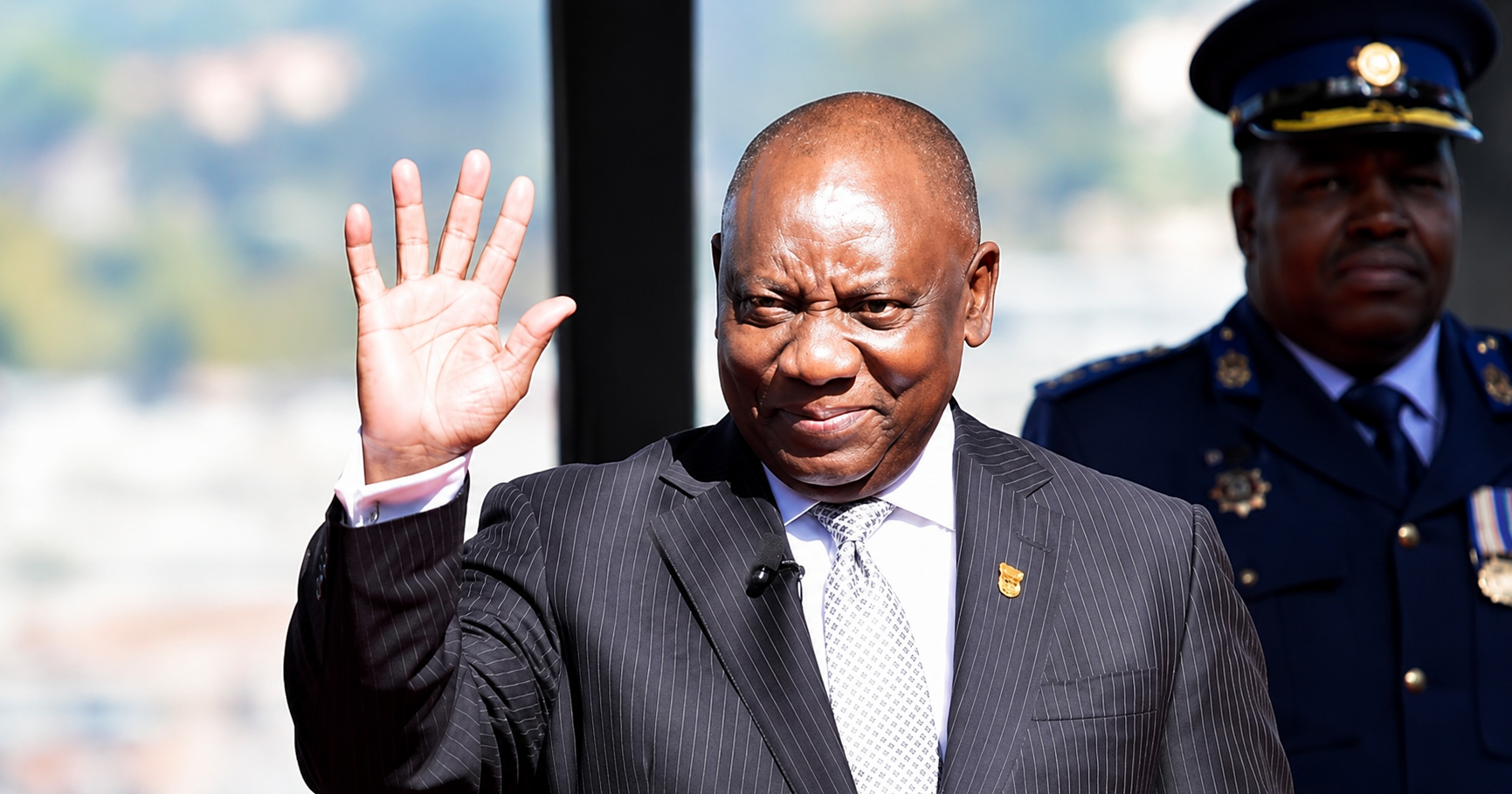
Ramaphosa Wins Court Order Halting Phala Phala Impeachment Proceedings
SOUTH AFRICA
South African President Cyril Ramaphosa has secured a significant legal victory after the Western Cape High Court temporarily stopped parliamentary impeachment proceedings linked to the long-running Phala Phala farm controversy.
The ruling, delivered on Friday, July 24, 2026, prevents Parliament’s impeachment committee from continuing its public hearings until the court determines Ramaphosa’s application to review an independent panel report released in November 2022.
The decision marks another major development in one of South Africa’s most closely watched political controversies, which has dominated public debate for several years and raised questions about accountability at the highest level of government.
Ramaphosa approached the court seeking an order to suspend the impeachment process while judges consider the legality of the report that concluded he “may have committed” serious constitutional violations and misconduct in relation to the Phala Phala matter.
Granting the application, Judge Andre le Grange ordered that parliamentary proceedings must remain on hold until the legal review has been resolved.
The judge stated:
“Pending the determination by this court of the applicant’s review, respondents are interdicted from proceeding with a public impeachment hearing.”
The ruling effectively pauses the work of Parliament’s impeachment committee, which had been established after South Africa’s Constitutional Court reopened the path for lawmakers to examine the allegations against the President.
The controversy centres on foreign currency reportedly stolen during a break-in at Ramaphosa’s Phala Phala game farm in Limpopo Province in 2020.
Questions surrounding the incident emerged after claims that hundreds of thousands of dollars in cash had been concealed inside furniture at the property before the burglary occurred.
Investigators later examined whether the President properly disclosed the theft to law enforcement authorities and relevant tax agencies.
Ramaphosa has consistently rejected allegations of wrongdoing throughout the investigation.
According to the President, the money involved came from the legitimate sale of 20 buffaloes and was not illegally obtained. He has also maintained that the theft was reported to the police in line with legal requirements.
The allegations were originally brought forward by a former intelligence chief who had previously been associated with former President Jacob Zuma.
The complaint alleged that Ramaphosa failed to report a robbery involving millions of dollars in foreign currency to both the police and tax authorities.
Although public prosecutors later decided not to pursue criminal charges in 2024, the legal and political debate surrounding the matter continued.
A major turning point came in May 2026 when South Africa’s Constitutional Court overturned an earlier parliamentary decision that had blocked impeachment proceedings.
That judgment paved the way for Parliament to establish a committee tasked with determining whether the President should face impeachment.
Friday’s High Court ruling has now temporarily interrupted that process until the separate judicial review is concluded.
The independent panel report at the centre of the dispute was initially presented to Parliament in late 2022.
While the report concluded that Ramaphosa could have a case to answer, the National Assembly, where the governing African National Congress (ANC) held a parliamentary majority at the time, voted against moving forward with impeachment proceedings.
The Constitutional Court later ruled that Parliament’s handling of the report required reconsideration, leading to the formation of the current impeachment committee.
Following the latest court decision, opposition parties criticised the ruling, arguing that it delays efforts to hold the President accountable.
Ramaphosa’s office, however, insisted that he remains committed to cooperating with constitutional institutions and respecting judicial processes.
In an official statement released after the judgment, the Presidency said:
“The President will continue to cooperate with and abide by processes of accountability.”
The statement also added:
“He reaffirms his respect of judicial independence and separation of powers enshrined in our Constitution.”
The High Court’s order does not determine whether the President committed any wrongdoing. Instead, it temporarily pauses parliamentary action until judges decide whether the 2022 independent panel report should remain valid.
Legal observers expect that review application to be heard in September, when the court will consider Ramaphosa’s challenge in full.
Should Parliament eventually resume the impeachment process after the court’s decision, it would represent a historic moment for South Africa, marking the first time a sitting president formally faces impeachment proceedings under the country’s constitutional framework.
Until then, the future of the parliamentary investigation remains on hold as the legal battle over the Phala Phala controversy continues.