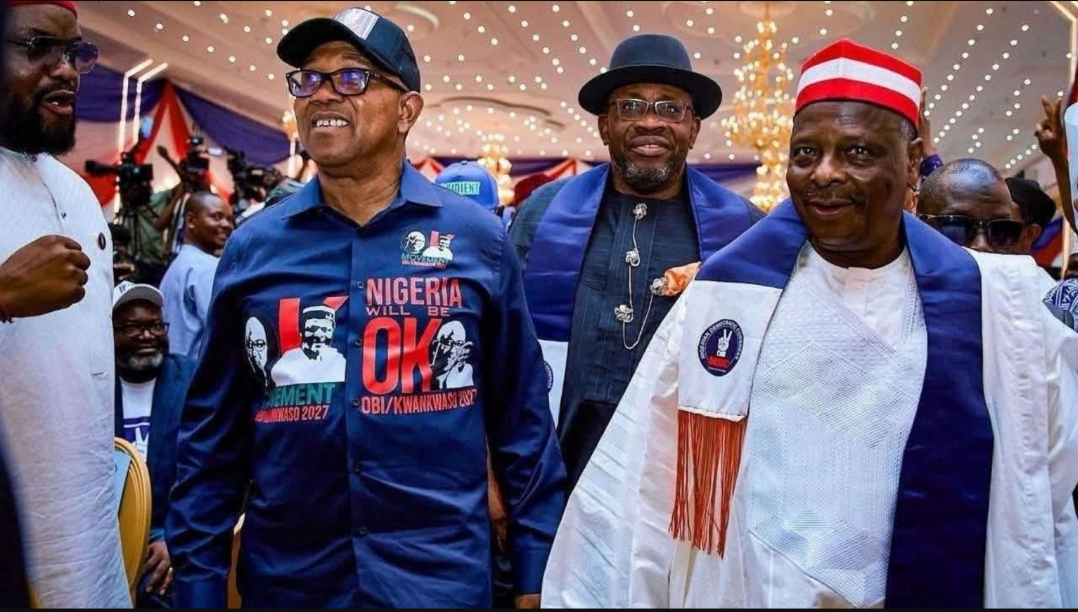
Dickson Linked To Foundation Of Nigeria Democratic Congress As NDC Gains National Attention
Senator Henry Seriake Dickson has once again come into focus over his long-standing contribution to Nigeria’s opposition politics, with growing attention on his role in laying the foundation for the Nigeria Democratic Congress (NDC).
Political observers have noted that although the NDC has recently attracted several high-profile politicians, the platform’s roots extend far beyond its recent rise in national politics. According to accounts surrounding the party’s development, Dickson spent years working to establish and strengthen the movement before it became widely recognised across the country.
The former Bayelsa State governor has built much of his political career around promoting multi-party democracy and encouraging strong opposition institutions. His political journey began with the Alliance for Democracy (AD), where he served as Bayelsa State chairman before becoming the party’s National Legal Adviser.
Supporters argue that those early leadership positions reflected his commitment to strengthening democratic institutions rather than pursuing political office alone. Throughout his career, Dickson has continued to advocate for political competition, maintaining that a vibrant opposition remains an essential pillar of democratic governance.
The NDC’s emergence on the national stage has generated increased public interest, particularly following the involvement of notable political figures. However, reports indicate that the party’s organisational work began years before its recent expansion, with its promoters focusing on building structures across different states before attracting national attention.
Dickson has consistently maintained that the objective has always been to create a political platform built on strong institutions rather than individual personalities. While acknowledging that no political organisation is without challenges, he has urged party members and supporters to remain committed to strengthening democratic processes.
Speaking on internal party matters, Dickson said, “While not claiming that the exercise was perfect, I urged all of them to bear with the party in view of the circumstances we are managing.”
Political analysts believe the growing conversation around the NDC reflects wider discussions about the future of opposition politics in Nigeria as preparations gradually gather momentum ahead of the 2027 general elections.
Dickson has repeatedly argued that democracy flourishes when citizens have credible political alternatives capable of holding those in power accountable. According to him, healthy political competition strengthens governance, promotes transparency and ultimately serves the interests of Nigerians.
His supporters also point to his experience as a former governor, federal lawmaker and serving senator as evidence of his understanding of governance and institution-building, qualities they believe have influenced the party’s development.
As Nigeria’s political landscape continues to evolve, attention is expected to remain on how the NDC expands its national structures and positions itself ahead of future elections. The party’s ability to maintain internal unity while staying committed to its democratic ideals will likely determine its influence in the country’s political space.
For Dickson, the emphasis remains on building lasting political institutions that can strengthen Nigeria’s democracy beyond individual election cycles. Supporters say that vision continues to shape the identity of the NDC as it seeks to establish itself as a significant force in the nation’s opposition politics.