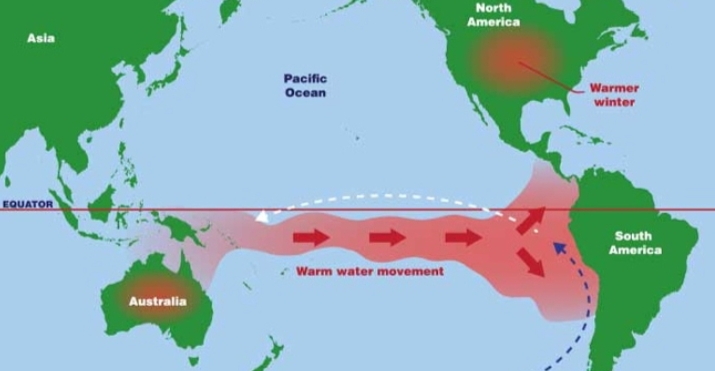
The United Nations has warned that the intensifying El Niño climate phenomenon poses a significant threat to global health, as countries prepare for potentially severe weather conditions expected to persist into 2027.
The warning comes as the World Meteorological Organisation (WMO) says El Niño is firmly established in the tropical Pacific and is expected to strengthen further in the coming months, potentially reaching very strong intensity before the end of 2026.
According to the WMO, the phenomenon is expected to continue influencing global weather patterns well into 2027, increasing the likelihood of extreme heat, drought, heavy rainfall and flooding in different parts of the world.
The health implications are a major concern because the effects of El Niño extend beyond temperatures and rainfall. Extreme weather can disrupt healthcare services, contaminate water supplies, increase exposure to infectious diseases and worsen food insecurity, particularly in communities that already have limited access to healthcare and other essential services.
The World Health Organisation has identified El Niño-related risks including heat-related illnesses, waterborne diseases, vector-borne diseases, malnutrition and interruptions to essential health services.
WHO experts have also warned that periods of heavy rainfall can create conditions favourable to mosquitoes and other disease-carrying vectors, potentially increasing the risk of illnesses such as malaria, dengue and chikungunya in affected areas.
The risk is not uniform across the world. El Niño changes weather patterns differently from one region to another, meaning some areas may experience excessive rainfall and flooding while others face prolonged drought, extreme heat and water shortages.
The Pan American Health Organisation, the WHO regional office for the Americas, said its assessment of the 2026–2027 El Niño indicates potential increases in risks associated with droughts, floods and heatwaves. It also identified possible consequences for food security, water availability, livelihoods, public health and critical infrastructure.
PAHO noted that climate-related health risks could include cholera and other waterborne diseases, dengue and other mosquito-borne illnesses, malaria, heat stress, respiratory problems associated with wildfires, malnutrition and disruptions to healthcare.
The Organisation warned that these risks could become more severe among populations already affected by poverty, food insecurity, displacement, migration or inadequate access to essential services.
El Niño Could Intensify Extreme Weather
El Niño is a naturally occurring climate phenomenon associated with unusually warm sea-surface temperatures in the central and eastern tropical Pacific Ocean. Changes in ocean temperatures can influence atmospheric circulation and alter rainfall and temperature patterns far beyond the Pacific region.
The WMO said in its September 2026 update that forecasts from its Global Producing Centres show a nearly 100 per cent likelihood that El Niño will persist through February 2027.
The agency also said exceptionally warm tropical Pacific waters are supporting further intensification, with the event expected to reach very strong intensity before peaking towards the end of 2026.
However, the WMO has cautioned against treating every region as though it will experience the same effects. The Organisation says the impacts of El Niño vary depending on its strength, duration, timing and interaction with other climate patterns.
WMO also does not officially use the term “Super El Niño” in its operational classifications. Instead, its current forecasts describe the developing event as a potentially very strong El Niño.
Health Systems Face Increased Pressure
The health consequences could be particularly serious when extreme weather coincides with already fragile healthcare systems.
WHO’s August 2026 preparedness programme on El Niño highlighted heat-related illness, waterborne and vector-borne diseases, malnutrition, mental health impacts and disruptions to essential health services as priority concerns. The Organisation urged governments and health authorities to strengthen preparedness and anticipatory action before conditions deteriorate.
The concern is already reflected in preparations across some countries.
In Africa, the WHO Regional Office for Africa reported in September that Kenya was preparing for potential El Niño-related flooding, with parts of eastern Africa expected to experience above-normal rainfall between October and December.
The agency said strong El Niño conditions, particularly when combined with a positive Indian Ocean Dipole, are often associated with increased rainfall in parts of eastern Africa. Countries and areas including Kenya, Somalia, eastern and southern Ethiopia, Uganda, Rwanda and Burundi could therefore face heightened risks of flooding and related health emergencies.
Such flooding can damage roads and healthcare facilities, displace communities, contaminate drinking water and make it more difficult for people to access medical treatment.
Drought creates a different set of problems. Reduced rainfall can affect agricultural production, water availability and livelihoods, increasing the possibility of food insecurity and malnutrition.
Food Security Also A Concern
Beyond direct health effects, the changing climate conditions associated with El Niño could place additional pressure on food systems.
Recent assessments of the developing event have pointed to potential disruptions to agriculture and fisheries, particularly in parts of Asia and the Americas. A report citing the International Rescue Committee said the expected peak between November 2026 and January 2027 could pose serious food-security challenges in Central America.
The WMO has similarly stressed that El Niño can significantly alter rainfall and temperature patterns around the world, creating risks for communities and climate-sensitive sectors such as agriculture.
At the same time, scientists distinguish between El Niño itself and human-caused climate change. El Niño is a naturally occurring climate pattern and is not caused by climate change. However, the WMO says a warmer atmosphere and ocean can amplify some of the extreme weather impacts associated with El Niño, including heatwaves and heavy rainfall.
Calls For Early Action
With the event expected to strengthen, international health authorities are urging governments to prepare before the most severe effects emerge.
PAHO has recommended stronger disease surveillance, improved monitoring of vulnerable populations, better integration of climate and health information, preparedness for disruptions to healthcare services and measures to protect water, sanitation and nutrition systems.
The broader message from international agencies is that early preparation can reduce the health and humanitarian consequences of extreme weather.
As El Niño develops through the final months of 2026 and into 2027, governments will therefore have to contend with a combination of risks rather than a single climate threat. Depending on location, communities could face extreme heat, drought, flooding, disease outbreaks, food insecurity, displacement or interruptions to essential services.
With forecasts pointing to a potentially very strong event, the United Nations and its health and climate agencies are urging countries to use the available window to strengthen preparedness and protect vulnerable populations before the climate-related risks become emergencies.