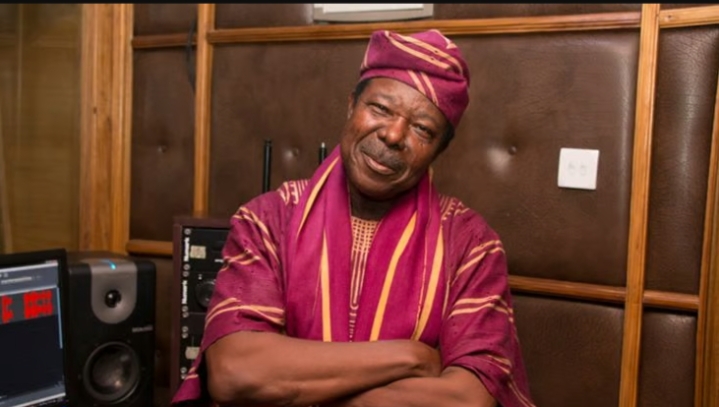
Legendary Nigerian juju musician, King Sunny Ade, has received birthday tributes from Ondo State Governor, Lucky Aiyedatiwa, and scores of fans as the celebrated singer marks his 80th birthday.
The music icon, whose real name is Sunday Adeniyi Adegeye, turned 80 on Tuesday, September 22, 2026, prompting messages of celebration from admirers who highlighted his decades-long contribution to Nigerian music and his role in taking juju music to international audiences.
Governor Aiyedatiwa, in a birthday message issued on Tuesday, described King Sunny Ade as a distinguished son of Ondo Kingdom and one of the prominent cultural ambassadors produced by the State.
According to the Governor, the veteran musician has used his career and music to promote the cultural identity, traditions and heritage of the people of Ondo, while simultaneously introducing Nigerian juju music to audiences beyond the country.
Aiyedatiwa said Ade’s accomplishments represented more than a successful musical career, noting that his influence had helped preserve and project aspects of Nigerian culture through music.
The Governor said the musician had carried the heritage, identity and traditions of his people to audiences across Nigeria and around the world.
He added that King Sunny Ade’s international recognition had helped draw attention to juju music while also promoting Nigerian language, culture and values.
Aiyedatiwa further described the 80th birthday milestone as an occasion to recognise the musician’s contribution to Nigeria’s cultural history and his influence on successive generations of performers.
The Governor said the veteran artiste’s achievements had brought honour to Ondo State and contributed to the enrichment of Nigeria’s cultural heritage.
The birthday celebration also generated reactions from fans on social media, with many admirers sharing personal memories of listening to King Sunny Ade’s music and describing him as an enduring figure in Nigerian music.
Some fans recalled growing up with his songs, while others used the occasion to pray for his continued good health and longevity.
One admirer, identified as @Gods Son, reminisced about listening to King Sunny Ade’s music while growing up in the village and recalled one of the musician’s songs associated with Oba Adesida.
“KSA, the man I grew playing his music in my village as a child,” the fan wrote, while describing the musician as a legend.
Another fan, @richard Oluwagbem, celebrated the coincidence of sharing a birth month with the veteran musician, writing, “Born in the same month as me. Happy birthday King Sunny Ade.”
Similarly, @fshion peel expressed admiration for the octogenarian and wished him continued longevity.
“May he continue to live long,” the fan wrote.
Another admirer, @the peace ambassador, prayed for the musician to age gracefully and remain in good health, describing him as a great legend.
@dvmmytex also celebrated King Sunny Ade for his contribution beyond juju music, describing him as a legend in Nigerian music generally and wishing him many more years.
Other social media users referred to the singer as an icon and legend, with @olowookere describing him as a favourite legend whose eight decades had been marked by an unforgettable contribution to Nigerian music.
Born on September 22, 1946, King Sunny Ade began his professional musical journey in the 1960s and established his own band in 1967. The group later became known as King Sunny Ade and His African Beats. His rise coincided with the growth and modernisation of juju music in Nigeria, a genre with deep roots in Yoruba musical traditions.
Ade went on to become one of the Nigerian musicians whose work gained significant international attention. In the early 1980s, he signed with Island Records, a major international label, and released albums including Juju Music and Synchro System. His recordings and performances helped introduce a wider international audience to contemporary Nigerian juju music.
His international breakthrough also earned him a place in Grammy history. According to the official Grammy Awards database, Synchro System received a nomination in the Best Ethnic or Traditional Folk Recording category at the 26th Grammy Awards in 1984. That nomination made King Sunny Ade the first Nigerian artist to receive a Grammy nomination.
He later received a second Grammy nomination for his 1998 album, Odu. The album was nominated in the Best World Music Album category at the 41st Grammy Awards in 1999. The Grammy database records Ade as having two nominations and no Grammy wins.
Beyond his recordings, King Sunny Ade became known for a distinctive musical style that blended traditional Yoruba musical elements with modern instruments and arrangements. His use of instruments such as the pedal steel guitar, alongside talking drums, guitars and other contemporary sounds, became part of the evolving sound associated with his music.
His career has also included collaborations and performances outside Nigeria, contributing to his reputation as one of the Nigerian musicians who helped expand the international reach of African popular music.
Decades after his emergence on the Nigerian music scene, King Sunny Ade remains associated with the history and development of juju music. His career has spanned generations, with his recordings continuing to serve as reference points in discussions about Nigerian traditional and popular music.
As he celebrates his 80th birthday, tributes from Government officials and fans reflect the enduring place his music occupies in Nigeria’s cultural landscape.
For Ondo State, the celebration also highlights the connection between the musician’s career and the cultural identity of the State, with Governor Aiyedatiwa using the occasion to recognise Ade’s contribution to promoting the heritage of the people.
For his numerous admirers, however, the milestone is also a personal celebration of a musician whose songs have formed part of the soundtrack of several generations.
At 80, King Sunny Ade’s birthday provides another opportunity to reflect on a career that has moved from Nigeria’s juju music scene in the 1960s to international Grammy recognition and decades of influence on African music.