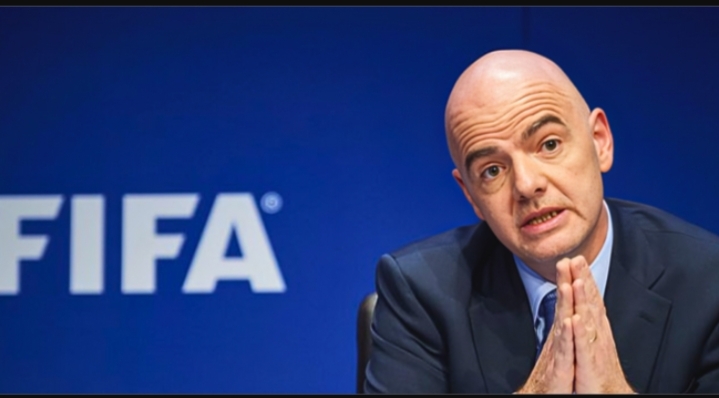
The race for the FIFA presidency has taken a dramatic turn after the Football Association of Wales (FAW) became the first national football federation to publicly withdraw its backing for Gianni Infantino’s bid for another term as President of world football’s governing body.
The decision marks a significant escalation in the growing opposition to Infantino’s leadership following the collapse of his controversial proposal to introduce private investment into FIFA’s flagship competitions, including the men’s and women’s FIFA World Cups.
In a strongly worded statement released on Monday, the Welsh football governing body announced that it would no longer support Infantino’s candidacy for the 2027–2031 presidential term. The election is scheduled to take place in Rabat, Morocco, in March 2027.
According to the FAW, recent events surrounding FIFA’s governance have raised serious concerns about the organisation’s leadership and decision-making process, prompting the Association to reconsider its position.
“The Football Association of Wales hereby confirms its withdrawal of support for the candidature of Mr. Gianni Infantino for re-election as FIFA President for the 2027–2031 term,” the statement read.
The Welsh body said a combination of governance failures, poor leadership, ineffective stakeholder engagement and questionable judgement had eroded its confidence in Infantino’s ability to continue leading global football.
It added that putting the interests of football first should always remain FIFA’s highest priority, arguing that recent developments suggested this standard had not been met.
The withdrawal comes after Infantino abandoned plans to seek private investment in FIFA’s most valuable competitions. The proposal had aimed to generate substantial financial returns by selling stakes in tournaments such as the FIFA World Cup and FIFA Women’s World Cup.
Under the plan, each of FIFA’s 211 member associations would reportedly have received about $40 million if they endorsed the investment arrangement.
However, the proposal quickly sparked widespread criticism from football stakeholders across several continents.
European football governing body, UEFA, emerged as one of the strongest opponents of the initiative, questioning both the process through which the proposal was introduced and the broader implications for the future ownership and management of football’s biggest competitions.
The backlash intensified as several continental confederations expressed dissatisfaction with the plan, ultimately forcing FIFA to abandon the proposal before it could move forward.
UEFA has since maintained a firm stance against Infantino’s leadership.
The organisation recently stated that the FIFA President had lost the confidence of European football following the handling of the investment proposal.
The Football Association of England is also understood to have formally communicated its position to FIFA, making it clear that it no longer supports Infantino’s bid for another term in office.
Although England has yet to publicly announce a complete withdrawal similar to Wales, the English FA issued a statement over the weekend affirming its full support for UEFA’s position.
That declaration signaled growing unity among European football authorities in questioning FIFA’s current leadership direction.
Beyond Europe, criticism has also emerged from other parts of the football world.
The Confederation of North, Central America and Caribbean Association Football (CONCACAF) called for what it described as a comprehensive reassessment of Infantino’s leadership following the failed investment proposal.
The Confederation suggested that recent events highlighted the need for greater accountability and stronger governance within FIFA.
Meanwhile, the Asian Football Confederation (AFC) welcomed FIFA’s decision to abandon the investment initiative but urged the organisation to embrace greater transparency in its future decision-making processes.
The AFC stressed that clearer communication and broader consultation with football stakeholders would be essential in rebuilding trust.
The collapse of the investment proposal has become one of the biggest governance challenges facing FIFA in recent years.
Critics argued that selling commercial stakes in the World Cup risked changing the nature of football’s most prestigious tournaments while raising concerns over long-term financial control and the influence of private investors.
Supporters of the proposal believed it would unlock significant new revenue streams that could be distributed among national associations and used to develop football worldwide.
However, opposition from influential confederations proved too strong, ultimately forcing FIFA to shelve the initiative.
With Wales now officially withdrawing its support, attention is expected to shift to whether additional member associations follow suit in the coming months.
The decision also places increased pressure on Infantino ahead of the March 2027 FIFA presidential election, where maintaining the confidence of member associations will be crucial to securing another mandate.
Although Infantino remains one of the most influential figures in international football, the recent controversy has exposed growing divisions within the global football community over FIFA’s governance, transparency and strategic direction.
As campaigning for the next FIFA election gradually gathers momentum, the stance taken by Wales could encourage further debate among national federations about the future leadership of world football.
Whether more associations publicly distance themselves from Infantino or choose to maintain their backing will likely shape the political landscape ahead of one of FIFA’s most closely watched presidential elections in recent years.