Ebola Patient in Nigeria Identified as Wife of Swiss Diplomat, Switzerland Says Uganda Travel
NIGERIA
Ebola Patient in Nigeria Identified as Wife of Swiss Diplomat, Switzerland Says Uganda Travel
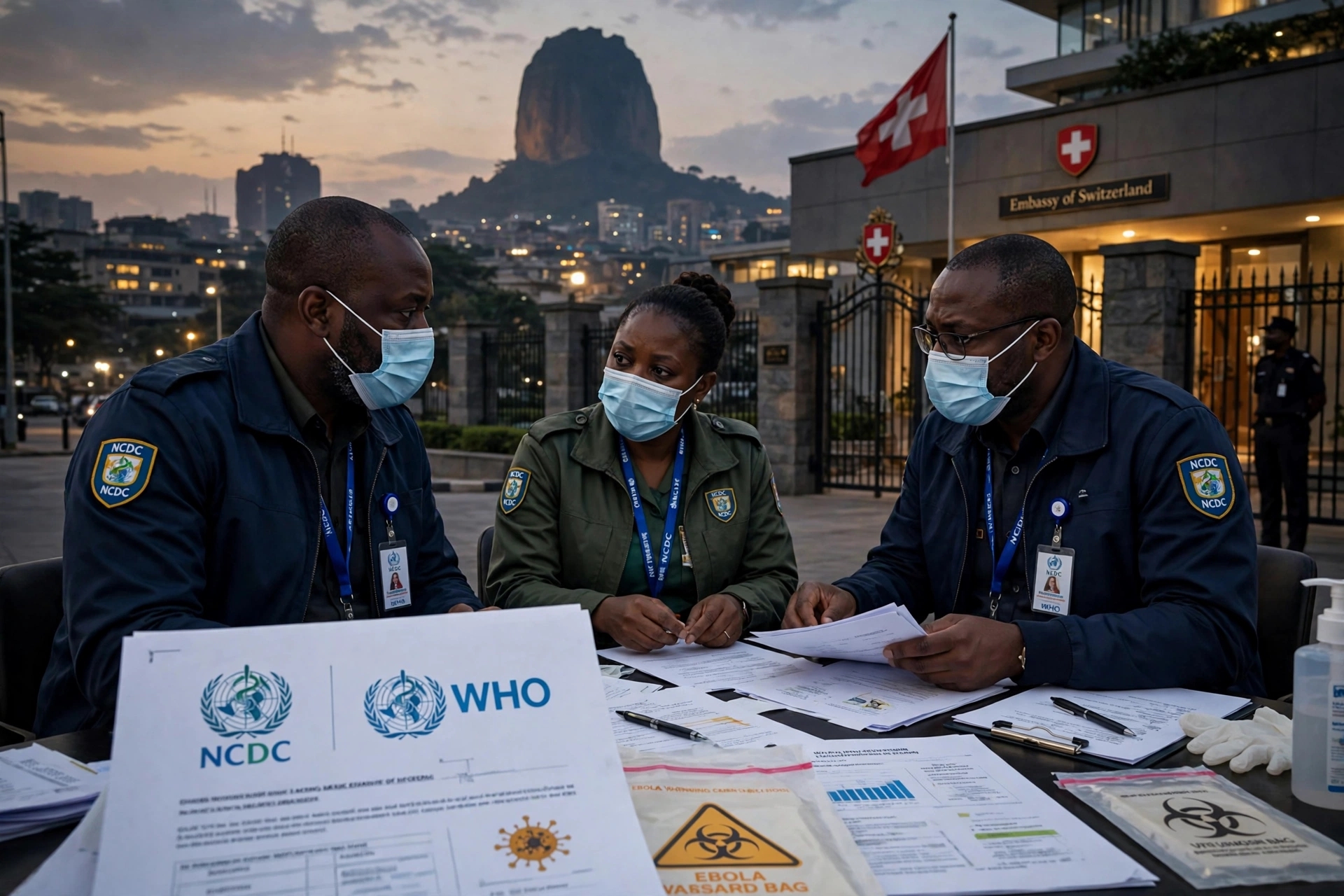
The Ebola case confirmed in Nigeria has been identified as the Ugandan-born wife of a Swiss diplomat based in Abuja, with Switzerland saying she is believed to have contracted the virus during travel to Uganda.
The development was disclosed on Thursday, 23 October 2026, by Switzerland’s Federal Department of Foreign Affairs in a statement to Reuters, providing new details about Nigeria’s first Ebola case in more than a decade.
According to the Swiss statement, the 42-year-old woman had spent about a week at a private clinic in Abuja with symptoms before laboratory confirmation was obtained on 20 October 2026. She is currently receiving care in isolation.
“She is believed to have contracted the virus whilst travelling to Uganda around two weeks ago,” the ministry said, adding that her husband, who travelled with her, is in isolation but has not shown any symptoms.
“Her husband is in isolation; he has not shown any symptoms. He was travelling with his wife when she is believed to have contracted Ebola.”
Nigerian authorities had confirmed the imported case of Ebola Bundibugyo virus disease in the Federal Capital Territory (FCT) on 20 October 2026, following laboratory testing. The Nigeria Centre for Disease Control and Prevention (NCDC) activated its incident management system to coordinate the national response.
Health authorities have identified 44 contacts who are being monitored as part of efforts to determine whether anyone else may have been exposed. Investigations are also examining the patient’s movements and potential points of contact, while infection prevention measures have been strengthened at the facility where she initially received treatment.
The precise location where the patient was exposed remains under investigation. While Ugandan officials said she had travelled to the eastern Democratic Republic of the Congo before transiting through Uganda, the World Health Organization (WHO) and Africa Centres for Disease Control and Prevention said they had not received validated information confirming travel to DRC.
Africa CDC official Wessam Mankoula said Nigeria and Uganda were sharing information to establish the patient’s movements and possible source of exposure. Uganda’s government said it currently has no Ebola cases.
The confirmed infection comes amid an ongoing outbreak of Ebola Bundibugyo virus disease in the Democratic Republic of the Congo, with related cases reported in other countries. The WHO has urged Nigerians to remain calm, emphasising that the detection of a single imported case does not mean the country is experiencing an Ebola outbreak.
The WHO has stressed the importance of early detection, effective contact tracing and strict infection prevention procedures in containing the disease. It has also advised against imposing travel or trade restrictions.
Ebola is a serious viral disease that can cause symptoms including fever, weakness, headache, muscle pain and sore throat, followed in some cases by vomiting, diarrhoea and other severe complications. Transmission occurs through direct contact with the blood or other bodily fluids of an infected person who is symptomatic, or with contaminated materials.
The virus does not spread simply because people share the same public space. Nevertheless, anyone who develops concerning symptoms after a possible exposure should seek prompt medical assessment and disclose relevant travel or contact history to healthcare professionals.
Nigeria’s experience managing the 2014 Ebola outbreak provides an important foundation for its current response. For now, the immediate priority is to contain the confirmed infection, complete the necessary investigations and establish whether any additional cases have occurred.