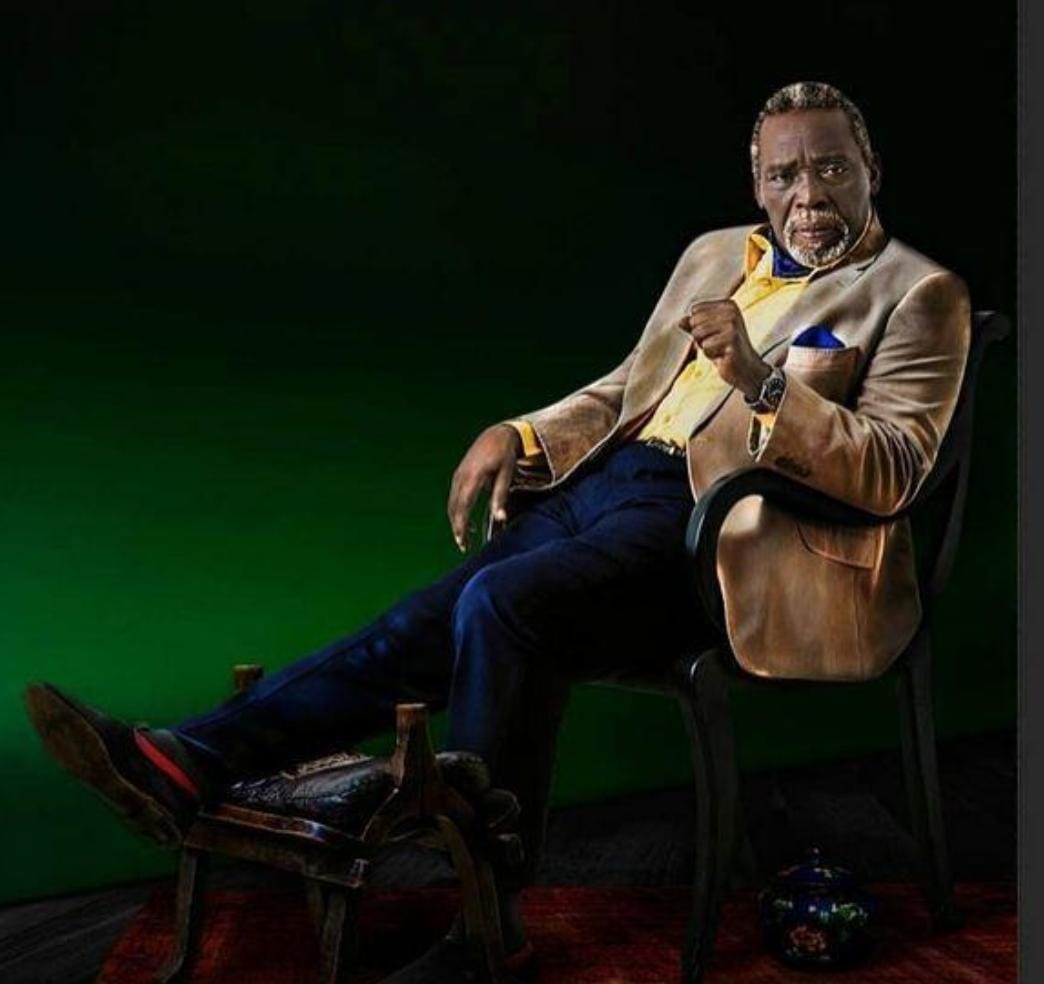
Olu Jacobs: The Extraordinary Journey of a Theatre-Trained Actor Who Helped Shape Nollywood
NIGERIA — ENTERTAINMENT
Long before Nollywood became a global cultural force, Oludotun Baiyewu Jacobs, known to millions simply as Olu Jacobs, had already begun building a career across theatre, British television and international cinema.
His death at 84 on September 16, 2026, closes a remarkable chapter in Nigerian entertainment history — one that began in Kano, travelled through the United Kingdom and eventually returned home to become deeply woven into the story of Nollywood.
From Kano to the Stage
Born on July 11, 1942, Jacobs spent his early childhood in Kano, where he attended Holy Trinity School.
His interest in acting developed at a relatively young age. According to biographical accounts published following his death, watching one of Chief Hubert Ogunde’s concert-party performances at the Colonial Hotel in Kano made a lasting impression on him.
That encounter helped set him on the path towards professional acting.
Jacobs eventually travelled to Britain to receive formal training at the Royal Academy of Dramatic Art in London, giving him a foundation in theatre that would remain visible throughout his career.
Before Nollywood, There Was Britain
For many Nigerians who knew Jacobs primarily from Nollywood, his earlier career abroad was an important part of the story.
He worked in British theatre and television and appeared in productions including The Goodies, Till Death Us Do Part, The Tomorrow People and The Professionals.
His career also extended into international cinema, with appearances in films including Ashanti, The Dogs of War, Baby: Secret of the Lost Legend and Roman Polanski’s Pirates.
These experiences placed Jacobs in a professional environment far removed from the Nigerian home-video industry that would later make him a household name.
The Return Home
Jacobs returned to Nigeria in 1990 and took on the role of Inspector Best Idafa in the NTA television series The Third Eye.
His return coincided with a period of transformation in Nigerian screen entertainment.
As Nollywood expanded, Jacobs became one of the actors whose experience, theatrical training and commanding presence translated naturally to the new Nigerian film industry.
He went on to appear in more than 100 Nigerian films, portraying characters ranging from traditional rulers and political figures to professionals and family patriarchs.
For audiences, his voice, composure and screen presence became instantly recognisable.
Recognition Beyond the Screen
Jacobs’ career was accompanied by major industry and national honours.
In 2007, he won the Africa Movie Academy Award for Best Actor in a Leading Role.
He was also recognised with the Industry Merit Award for outstanding achievements in acting at the Africa Magic Viewers’ Choice Awards and received the national honour of Member of the Order of the Federal Republic (MFR) in 2011.
His career was therefore not simply measured by the number of films in which he appeared. It was also reflected in the industry’s formal recognition of his contribution to acting.
A Partnership Beyond Acting
Olu Jacobs’ professional journey was closely connected to that of his wife, veteran actress Joke Silva.
Together, they became one of the most recognisable couples in Nigerian theatre and film and were involved in building creative enterprises, including the Lufodo Group and the Lufodo Academy of Performing Arts.
Their partnership extended beyond appearing on screen, reflecting a shared involvement in the development and training of performers.
The Legacy He Leaves Behind
Olu Jacobs belonged to a generation of Nigerian performers whose careers crossed several eras of entertainment.
He was trained in classical theatre, worked in British productions, appeared in international films and eventually became one of the familiar faces of Nollywood.
That journey matters because Nigerian cinema itself changed dramatically during his lifetime.
Jacobs’ career moved alongside that transformation — from stage productions and television to the emergence of a Nigerian film industry that would eventually reach audiences around the world.
His passing therefore represents more than the loss of a celebrated actor.
It marks the end of one of the longest and most distinctive acting journeys in Nigerian popular culture.
For generations who watched him on television, saw him on the big screen or encountered his work through Nollywood’s expanding catalogue, Olu Jacobs leaves behind a body of work that will continue to introduce his craft to audiences who were not yet born when his journey began.
The curtain may have fallen, but the performance remains.